When you’re in Italy, you’ll hopefully have lots of opportunities to taste new things, like the local wine or a dish that’s famous in the region you’re visiting.
But when you’re talking about “taste” in Italian, there are a few different words you can use and it’s easy to get them mixed up.
Here, you’ll see how each one works, with some useful phrases for Italy.
Assaggiare - to have a taste
Pronunciation: Ahs-sahj-JAH-reh
Assaggiare means “to taste” in Italian. It gives the idea of having a small amount of something, like a bite of someone’s pasta or a sip of their wine. Sometimes we might translate it with “try” in English as well.
Here are some handy phrases you might use with it:
Vuoi assaggiare? -Do you want a taste?
Vuoi assaggiare il mio gelato? -Do you want to try my ice-cream?
Posso assaggiare? -Can I have a taste?
Vorrei assaggiare questo formaggio. -I’d like to have a taste of this cheese.
Chi assaggia?* -Who’s tasting?
*The waiter will often pour a small amount into someone’s glass first so they can taste it and check that it isn’t too acidic or doesn’t have a corky taste. For more about drinking vino in Italy, you can read our lesson ordering wine in Italy: useful phrases and tips .
Provare - to try
Pronunciation: Proh-VAH-reh
You can use provare to talk about trying something in general, like trying something food or drink for the first time .
For example:
Vuoi provare questo vino? -Do you want to try this wine?
Volete provare il piatto del giorno? -Do you (plural) want to try the dish of the day?
Vorrei provare la pasta alla norma*. -I’d like to try the pasta alla norma.
* Pasta alla norma is a typical Sicilian dish made with aubergine and ricotta salata (lit. salty ricotta).
A Common Mistake With Provare
In English, if you want to offer someone a bit of your food, you could say: “do you want to try some?”
Sometimes learners translate this literally in Italian, and say: “ vuoi provare?”
But in Italian, if you’re offering someone a bite or taste of something, you’d use assaggiare, like you saw in the phrases above.
For example, if you wanted to offer someone a bite of your very yummy torta al cioccolato (chocolate cake) you’d say “vuoi assaggiare? ” and not “ vuoi provare? ”.
Fare una degustazione: To do a tasting
Pronunciation: FAH-reh OO-nah deh-goo-stah-TSYOH-neh
You’ll often see the phrase fare una degustazione when organised tasting is involved, particularly with things like wine, cheese or olive oil.
For example:
Stasera vorrei fare una degustazione di vini locali. - This evening I’d like to do a local wine tasting.
Ci sono posti qui vicino dove è possibile fare una degustazione di vini? -Are there places nearby where it’s possible to do a wine tasting?
Andiamo in Veneto per fare una degustazione di Prosecco. - We’re going to Veneto to do a Prosecco tasting.
Mi piace l’idea di fare una degustazione di formaggi - I like the idea of doing (some) cheese tasting.
While we’re talking about Prosecco, here we take you on a little tour around Veneto and tell you about how Prosecco is made.
Taste in Italian: Assaggiare, Provare & More: Review
-
Assaggiare means “to taste” and it often means having a small amount of something to see what it tastes like.
For example:
Vuoi assaggiare il mio gelato? -Do you want to try my ice-cream?
Posso assaggiare? -Can I have a taste?
-
Provare means “to try” more generally, like trying food or drink for the first time.
For example:
Volete provare il piatto del giorno? -Do you (plural) want to try the dish of the day?
-
Fare una degustazione means “tasting” in the sense of an organised food or drink tasting.
For example:
Stasera vorrei fare una degustazione di vini locali. - This evening I’d like to do a local wine tasting.
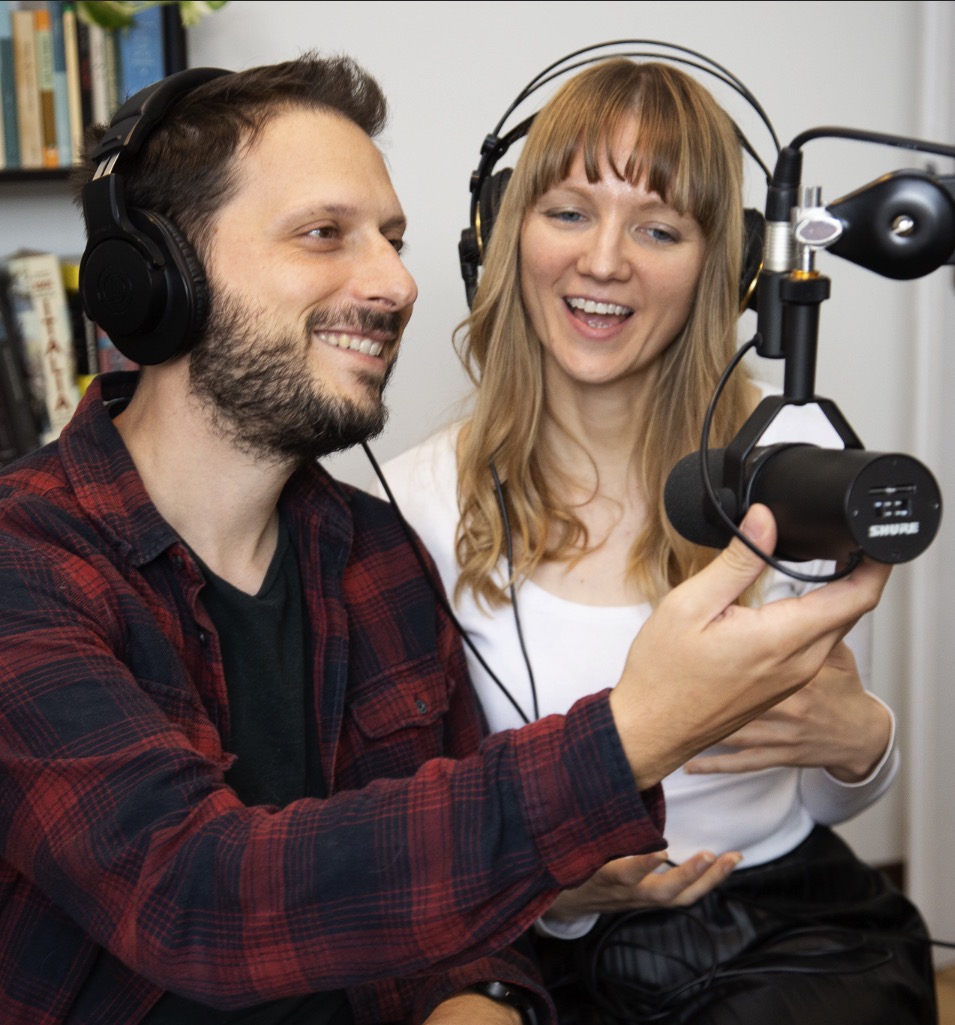
K: Ciao a tutti tutti benvenuti! Hi everyone and welcome to Learn Italian with Joy of Languages.
M: In this episode, you’ll hear 3 useful phrases to do with tasting things that you might hear or use in Italy.
K: But before we get started, can we ask you a quick favore ? If you’re listening to this on your podcast app, could you click the subscribe or follow button? This way you’ll get notified when we release a new episode and you’ll help our podcast grow so we can keep making free lessons like this. Grazie !
K: The first useful phrase with “taste” is one you can use if you want to ask if an Italian wants to try something you’re eating or drinking.
M: Vuoi assaggiare? (x2) – Do you want a taste? Literally:
Vuoi – you want
Assaggiare – to taste
K: For example if you’re in Rome and you’ve ordered cacio e pepe, a traditional Roman dish which is made with pasta, pepper and pecorino cheese, you might want to say vuoi assaggiare? to offer your Italian friend a taste. It’s a nice phrase to know to sound friendly.
M: Or you might hear an Italian say vuoi assaggiare? to you if they’re offering you a snack or something they’ve made, especially if they think you might not have tried it before.
K: The next phrase is one that you might hear a waiter say in Italy.
M: Chi assaggia? Who’s tasting? Literally:
Chi - Who
Assaggia - is tasting
K: If you order a bottle of wine in Italy, the waiter will often pour a little for someone at the table to try first. It’s to make sure the wine tastes ok, for example, that it doesn’t taste too acidic or doesn’t have a corky taste.
M: Chi assaggia? (x2)
There’s another phrase a waiter might use if they want to ask if you’d like to taste something.
M: Volete provare il piatto del giorno - Do you (plural) want to try the dish of the day. Literally:
Volete - you (plural) want
Provare - to try
Il - the
Piatto - dish
Del - of the
Giorno - day
Volete provare il piatto del giorno?
M: You might already know that Italian has the plural you, for when speaking to more than one person. It’s the one a waiter would use when speaking to you and the other people at your table. In this case “you plural want”, volete.
K: Coming back to talking about tasting. Italian has these two different words, just like in English. We have “to taste”, assaggiare (x2) , and “to try”, provare (x2) . The only confusing thing is, in English, we can sometimes use “try” and “taste” in the same situation. For example, you could say “do you want a taste?” or “do you want to try some?” when you’re offering some of your food.
M: But in Italian, these two words are nearly always used differently. Assaggiare is specifically for tasting food or drink, usually a small amount, just to get a taste, like a bite of someone’s pasta or a sip of their wine. While provare means to try in the more general sense, either to try a whole dish, or anything else that is more than a few bites or sips.
K: Now that you’ve heard a few useful phrases to do with tasting things in Italy, let’s see what you can remember.
What’s the Italian for “do you want a taste?”
[…]
M: Vuoi assaggiare? (x2)
K: What’s the Italian for “who’s tasting?”, like a waiter might use if he’s asking who’s going to have a sip of the wine?
[…]
M: Chi assaggia? (x2)
K: And how would you say “do you (plural) want to try”, like in the phrase “do you (plural) want to try the dish of the day”?
M: Volete provare? (x2). For example, volete provare il piatto del giorno?
K: You’ve heard a few different phrases you can use when eating out, but of course there are lots more.
M: And there’s another word to do with tasting that we haven’t mentioned here. It’s a good one to know if you’re planning on doing any wine or food tasting in Italy.
K: Just click the link in the description to head over to our website, or go to italian.joyoflanguages.com/podcast and search for episode 244.
M: See you next time.
K: Or as we say in Italian:
Alla prossima!
Time to check your understanding and remember everything you just learned! Below you’ll find a mini-quiz and some vocabulary cards to help it all go in.
Quiz: Taste in Italian: Assaggiare, Provare & More
How much did you learn? Find out in the quiz!
Click here to take the quiz for this episode: Italian words: Taste in Italian: Assaggiare, Provare & More
Vocabulary
Vuoi assaggiare il mio gelato? = Do you want to try (i.e. have a bite of) my ice-cream?
Posso assaggiare? = Can I have a taste?
Vorrei assaggiare questo formaggio = I’d like to have a taste of this cheese
Vorrei provare la pasta alla norma = I’d like to try the pasta alla norma
Stasera vorrei fare una degustazione di vini locali = This evening I’d like to do a local wine tasting
Andiamo in Veneto per fare una degustazione di Prosecco = We’re going to Veneto to do a Prosecco tasting
Mi piace l’idea di fare una degustazione di formaggi = I like the idea of doing (some) cheese tasting
Vuoi assaggiare? = Do you want to have a taste?
Chi assaggia? = Who’s tasting?
Volete provare il piatto del giorno? = Do you (plural) want to try the dish of the day?
Flashcards: Italian Words: Taste in Italian: Assaggiare, Provare & More
Not sure how it works? Click here to watch the tutorial