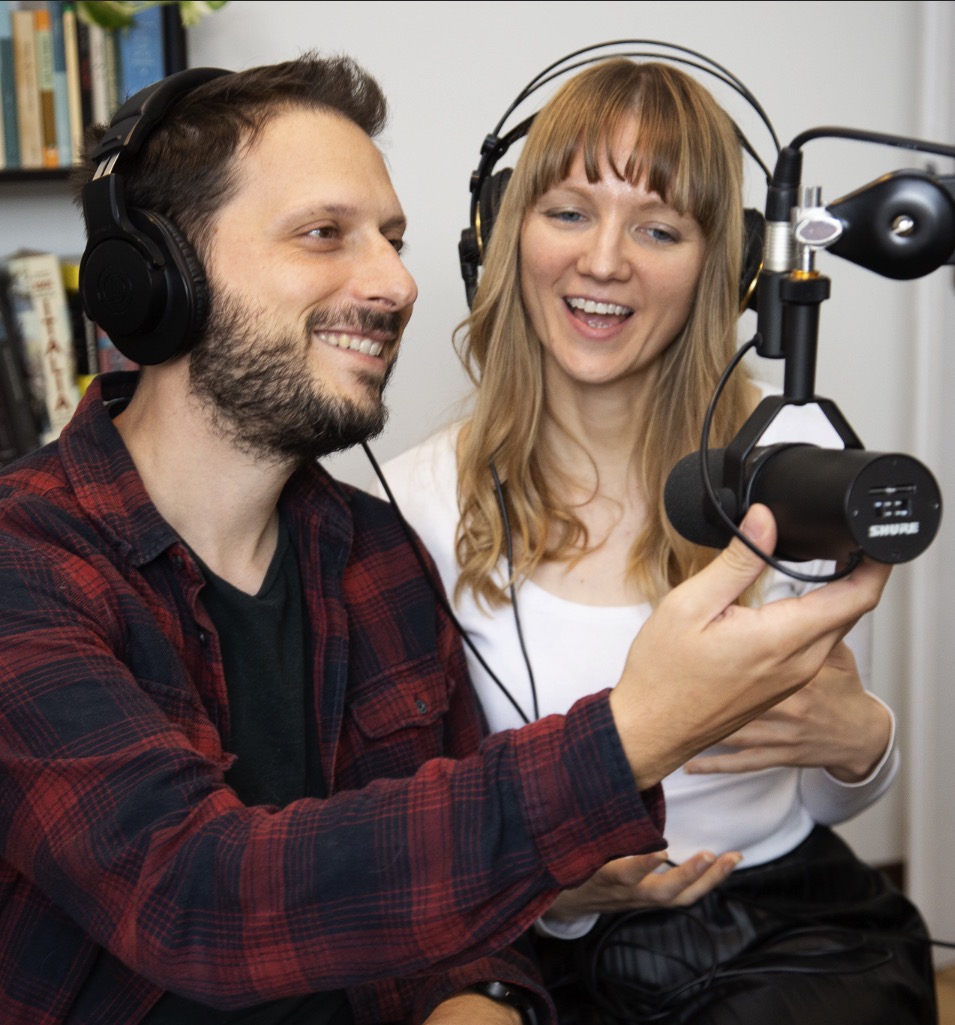
There are lots of situations where you’ll need greetings in Italian on your trip to Italy. Like when you’re saying hello to a shopkeeper, a hotel receptionist, or friends and family you’re meeting up with.
In other countries saying “hello” and “goodbye” is sometimes optional, but in Italy it’s considered polite to always say something as you arrive and leave a place, even if you don’t know the people personally.
In this post, you’ll see different greetings in Italian for different situations in Italy. You’ll also see which greetings are formal and which are informal, so you can choose the right one for each situation.
Saying Hello
Ciao - Hi
Pronunciation: Chow
Ciao is an informal greeting you can use with friends and Italians you know well.
Sometimes you might also hear Italians use ciao with people they don’t know well in more relaxed places, like a café. To be on the safe side you can say ciao if you hear an Italian greet you this way first.
Ciao is also useful because it means “hello” and “goodbye” in Italian.
For example:
Ciao Matteo! Come va? -Hi Matteo! How’s it going?
Ciao a tutti! -Hi everyone!
Ciao, a domani! -Bye, see you tomorrow! (lit. to tomorrow)
Buongiorno - Hello, good morning
Pronunciation: Bwon-JOR-noh
You can use buongiorno (literally “good day”) to greet Italians during the daytime.
Although you can use it with friends as well, buongiorno is a formal greeting, so you can use it in shops, cafés, hotels and other situations where you don’t know the people well.
You can use buongiorno by itself to acknowledge someone. For example, if you walked into a shop in Italy, it’s polite to say buongiorno.
Or you can say buongiorno , before going on to say something else, like if you’re asking for information or help with something.
Buongiorno, dove possiamo comprare i biglietti per il tour? -Good morning, where can I buy tickets for the tour?
Buongiorno, da dove parte il treno per Napoli? -Good morning, where does the train leave from for Naples?
Buongiorno, c’è un parcheggio qui vicino? -Good morning, is there a parking lot nearby?
Buondì - Good morning
Pronunciation: Bwon-DEE
Buondì is an informal greeting in Italian. It’s a combination of the word buon (good) and dì, an old-fashioned word for “day” that comes from the Latin dies.
For example:
Buondì! Hai dormito bene? -Good morning, did you sleep well?
Buondì! Cosa fai oggi? -Good morning! What are you up to (lit. doing) today?
Buonasera - Good evening
Pronunciation: Bwoh-nah-SEH-rah
Buonasera is an Italian greeting you can use from late afternoon onwards. It’s a formal greeting.
For example:
Buonasera, avete un tavolo per due? -Good evening, do you have a table for two?
Buonasera, è possibile avere un altro asciugamano in camera? -Good evening, is it possible to have another towel in the room?
Buonasera, a che ora chiude la palestra dell'hotel? -Good evening, what time does the hotel gym close?
Salve - Hello
Pronunciation: SAL-veh
Salve is a formal greeting in Italian that’s useful to know because you can use it at any point in the day.
For example:
Salve, abbiamo una prenotazione per stasera alle otto. -Hello, we have a reservation for this evening at eight.
Salve, vorrei comprare un biglietto per il giro in barca. -Hello, I’d like to buy a ticket for the boat tour.
Benvenuto - Welcome
Pronunciation: Ben-veh-NOO-toh
You can use benvenuto a lot like the English “welcome”. It's a friendly way to greet someone when they arrive somewhere
For example:
Benvenuti in Italia! -Welcome to Italy!
Benvenuti a casa mia. -Welcome to my house.
But in Italian, you just have to remember to change the endings of benvenuto depending on who you’re welcoming.
So it’s:
Benvenuto → For welcoming someone male, for example benvenuto Matteo -welcome Matteo.
Benvenuta → For welcoming someone female, for example benvenuta Katie -welcome Katie
Benvenuti → For welcoming a male group or mixed group, for example benvenuti Matteo e Katie -welcome to Matteo and Katie.
Benvenute → For welcoming a female group, for example benvenute Annaluna e Mary -welcome Annaluna and Mary
Asking How Someone Is
Come stai? - How are you? (Informal)
Pronunciation: KOH-meh STY
Come stai is the informal way of asking “how are you” or “how are you doing?”
You can use this to check in on friends or family.
For example:
-Ciao Mike, come stai? -Hi Mike, how are you?
-Bene grazie, e tu? -Good thanks, and you?
Come sta - How are you (formal)
Pronunciation: KOH-meh STAH
Come sta is the formal way of asking “how are you” in Italian.
For example, the restaurant owner might ask his regular customer:
Come sta signora? -How are you ma’am?
The “you (formal) in Italian is always the same as the he and she form.
So now that you know how to say “how are you (formal)?”, you also know how to say “how is he” or “how is she”. You can use this to be polite and ask how Italians’ family members are doing.
For example:
Come sta tuo cugino? -How’s your cousin doing?
Come sta tua figlia? -How’s your daughter doing?
If you want to know more about how come stai and come sta work in Italian, you can go to our lesson on stare: the Italian verb you need to know .
Come va? - How’s it going?
Pronunciation: KOH-meh VAH
Another informal greeting in Italian is come va? You can use it to ask how someone is doing generally, or you can use it with the word con (Italian for “with”) to ask how things are going with something in particular.
For example:
Ciao Katie, come va? -Hi Katie, how’s it going?
Come va con il nuovo corso di italiano? -How’s it going with the new Italian course?
Tutto bene? - All good?
Pronunciation: TOOT-toh BEH-neh
Tutto bene is an informal way of asking “how are you?”. You can use it to ask one person how they’re doing, or several people in a group.
You turn it into a question by raising your voice at the end, but you can also use it as a reply.
For example:
Tutto bene? -All good?
Sì, tutto bene grazie! -Yes, all good thanks!
You might also hear a waiter ask this question to check that everything went well with your meal.
If you want to show you really enjoyed it, you can say:
Benissimo, grazie. - Very good, thank you.
Come vanno le cose? - How are things going?
Pronunciation: KOH-meh VAN-noh leh KOH-zeh
If you want to ask an Italian how things are going in general, rather than just how they’re feeling that day, come vanno le cose is a useful phrase to use.
This one might be useful if you haven’t seen someone for a while and want to hear what’s new with them.
For example:
Da quanto tempo! Come vanno le cose? -It’s been a while! How’s everything going?
Tutto a posto? - Everything all good?
Pronunciation: TOOT-toh ah POS-toh
Tutto a posto is another informal way to say “how are you” in Italian. It’s literally like saying “is everything in order”?
Like tutto bene , you can use tutto a posto as both a question and an answer.
For example:
Tutto a posto? -Is everything all good?
Si, tutto a posto grazie. -Yes, all good thanks.
If you use tutto a posto with con (the Italian for “with”), you can check how a particular thing is going for someone.
For example:
Tutto a posto con i lavori in casa? -All good with the (renovation) works in the house?
Tutto a posto con i nuovi vicini? -All good with the new neighbours?
When You Meet Someone for the First Time
Piacere di conoscerti - Nice to meet you (informal)
Pronunciation: Pyah-CHEH-reh dee koh-NOH-sher-tee
Piacere di conoscerti is the informal way of saying “nice to meet you” in Italian.
You can often use this one with friends of friends.
For example:
Piacere di conoscerti. Sei un amico di Katie, giusto? -Nice to meet you. You’re a friend of Katie’s, right?
Piacere di conoscerti, sono Marco. -Nice to meet you, I’m Marco.
You might know tu as the informal “you” in Italian, but in the phrase “nice to meet you” we use ti for “you” . You don’t have to worry about why for now, you can just learn this phrase as it is, but if you do want to read more about it later, you can go to our lesson on direct object pronouns in Italian .
Piacere di conoscerla - Nice to meet you (formal)
Pronunciation: Pyah-CHEH-reh dee koh-NOH-sher-lah
Piacere di conoscerla is the formal way of saying “nice to meet you” in Italian.
For example, if you were at an Italian wedding, and you met the bride’s father for the first time, you might say: Piacere di conoscerla! -Nice to meet you.
Piacere - Nice to meet you (formal and informal)
Pronunciation: Pyah-CHEH-reh
If you don’t want to say the full phrase piacere di conoscerti or piacere di conoscerla, you can just say piacere!
Italians use piacere all the time and the good news is you can use it in both formal and informal situations.
If you want to know more about how piacere works in Italian (including how you can reply) you can go to our lesson on how to say “nice to meet you” in Italian .
Seeing Someone Again
Bentornato - Welcome Back
Pronunciation: Ben-tor-NAH-toh
If an Italian has been away, like on a trip somewhere, you can say bentornato for “welcome back”. It’s a phrase that Italians use a lot.
You just have to change the ending depending on tho you’re talking to, so it’s
Bentornato → welcome back, to someone male
Bentornata → welcome back, to someone female
Bentornati → welcome back, to a group of men or a mixed group
Bentornate → welcome back, to a group of women
Che bello vederti - How lovely to see you
Pronunciation: Keh BEL-loh veh-DER-tee
When you want to show that you’re happy to see someone again, you can say che bello vederti. Literally: how beautiful to see you. You can use this as you say “hello” to someone, or later on to let them know you enjoyed seeing them.
For example:
Che bello vederti dopo tutto questo tempo! -How lovely to see you after all this time!
Che bello vederti oggi! -How lovely to see you today!
It might sound strange to use “beautiful” when you’re not talking about the way something looks, but that’s because bello is used in Italian to mean “nice” or “lovely” as well. You can read more about this in our lesson Italian words for beautiful that Italians actually use .
Che bello vedervi - How lovely to see you (plural)
Pronunciation: Keh BEL-loh veh-DER-vee
When you’re speaking to two or more people, you’d say che bello veder vi . Vi is the word for “you” plural that we’d use here.
For example:
Che bello vedervi! Come va? -How lovely to see you! How’s it going?
Che bello vedervi stasera! -How lovely to see you this evening.
Da quanto tempo! - It’s been a while!
Pronunciation: Dah KWAN-toh TEM-poh
If you haven't seen someone for a while, you can say da quanto tempo! It’s a bit like saying “long time no see” or “I haven’t seen you in ages” in English.
For example:
Ciao Matteo! Da quanto tempo! -Hi Matteo! It’s been a while!
Da quanto tempo! Come va? -It’s been a long time. How’s it going?
Da quanto tempo a shortened version of the phrase da quanto tempo che non ci vediamo - it’s been a long time that we haven’t seen each other. But just like in English, that’s very wordy, so Italians often use the shortened version and just say da quanto tempo.
Dare due baci - Giving two kisses
It’s not a phrase, but another way that Italians often greet each other if they know each other is by giving each other two kisses.
It’s sort of a kiss on each cheek (right, then left by the way, just to avoid any accidental lip kissing if you get mixed up 😅). But some tourists think that you should plant a kiss on each cheek, and it’s actually more of an “air kiss”.
There are some places in Europe where you give two kisses even if you don’t know the other person very well, but in Italy you tend to only dare due baci with friends and acquaintances. If you don’t know someone, you usually just shake their hand.
Saying Goodbye
Arrivederci - Goodbye
Pronunciation: Ahr-ree-veh-DER-chee
Arrivederci literally means “until we see each other again”. It’s the polite goodbye that you can use with people you don't know well.
In Italy, you usually say goodbye when leaving a place, like a shop, café or restaurant. So you can use arrivederci in these situations.
For example:
Grazie, arrivederci! -Thank you, goodbye!
Grazie per l’aiuto, arrivederci! -Thank you for the help, goodbye!
Alla prossima - Until next time
Pronunciation: AL-lah PROS-see-mah
Alla prossima is short for alla prossima volta. Literally: until next time.
You can translate alla prossima with “see you later”, but it’s more of a “see you later” when you’re not sure exactly when you might see someone again, or if you think it’s likely to be a little while before you see them next.
For example:
Grazie per la bellissima serata. Alla prossima! -Thank you for the wonderful (lit. really beautiful) evening. See you next time!
A tra poco - See you soon
Pronunciation: Ah trah POH-koh
If you know you’re going to see someone very soon, you can say a tra poco!
Although we can say “see you soon” in English even though it might be a little while until we see someone next, a tra poco is used in Italian when you know you’re going to see each other again after a very short time period. It’s a bit like saying “see you in a bit”.
For example, if you’re just heading out of the house to get some latte (milk) , or you’re taking the dog for a walk, you could say a tra poco in Italian.
A dopo - See you later
Pronunciation: Ah DOH-poh
If you’re not going away for too long, you can say a dopo as a way of saying “see you later” in Italian.
For example, if you’re just popping out for a walk or to meet your friend for breakfast, you could say a dopo!
Sometimes learners make the mistake of using a dopo when they actually won’t see someone for a while because they’re translating from the English “see you later”.
A presto - See you soon
Pronunciation: Ah PREH-stoh
A presto is a good option in Italian if you want to say “see you soon”, and you don’t mean very shortly, but in the near future.
For example:
A presto! Ci vediamo in luglio! -See you soon! I’ll see you (lit. we’ll see each other) in July.
Ciao Marco, a presto! -Bye Marco, see you soon!
Buon viaggio e a presto! -Have a good trip and see you soon!
Ci vediamo - See you
Pronunciation: Chee veh-dee-AH-MOH
Ci vediamo literally means “we see each other”. Sometimes learners translate literally from the English and say ti vedo dopo for “see you later” , but ci vediamo is the most natural way to say “see you later” in Italian.
You can use ci vediamo by itself to mean “see you later”.
For example:
Ciao, ci vediamo! -Bye, see you later.
Or you can add other phrases to the end, depending on when you think you’ll see someone.
For example:
Ci vediamo domani! -See you tomorrow!
Ci vediamo sabato. -See you on Saturday.
È stato un piacere - nice meeting you
Pronunciation: EH STAH-toh oon pyah-CHEH-reh
È stato un piacere is a friendly phrase you can use after meeting someone for the first time.
For example:
È stato un piacere conoscerti. -it’s been a pleasure meeting you.
È stato un piacere e alla prossima! -It was nice meeting you and until next time!
Ci sentiamo - We’ll be in touch
Pronunciation: Chee sen-tee-AH-MOH
Ci sentiamo literally means “we hear each other”.
There are a few different ways to translate ci sentiamo in English, but overall it’s a way to say goodbye when you expect to be in touch again soon by phone, text or email.
For example:.
Devo andare, ma ci sentiamo quando arrivo. -I have to go, but I’ll call when I arrive.
Ci sentiamo per organizzare il prossimo viaggio . -Let’s talk soon to organise the next trip.
Grazie di tutto, e ci sentiamo. -Thanks for everything and talk later.
Buona giornata - Have a good day
Pronunciation: BWOH-nah jor-NAH-tah
Buona giornata is a way to say “have a good day” in Italian that you can use in both formal and informal situations.
You might know buongiorno is “good day” in Italian. Buona giornata also literally means “good day” in Italian, but it’s what you say when you’re leaving rather than when you arrive.
For example:
Arriverderci e buona giornata! - Goodbye and have a good day
Grazie per il pranzo, buona giornata! - Thank you for lunch, have a good day!
💡Good to know: In Italian, you can often put the word “good” ( buon for masculine and buona for feminine words) in front of a word to give well wishes to someone. You’ll see a few more examples with this below, but you can also read more about how it works in our lesson: what’s Italian for “bon voyage”?
Buona serata - Have a good evening
Pronunciation: BWOH-nah seh-RAH-tah
You might know buonasera for “good evening”. To say “have a good evening”, you say buona serata.
There’s a slight difference between sera and serata for evening in Italian. We don’t have two different words for it in English, but serata puts more emphasis on the whole evening, so you’re sort of saying “enjoy the rest of the evening”.
But you don’t have to worry about this for now, you can just learn buona serata as a set phrase for “have a good evening”
Here’s how you can use it:
Buona serata, ci vediamo domani. -Have a good evening, see you tomorrow.
Grazie per la cena e buona serata! -Thanks for dinner and have a good evening!
Buon viaggio - Have a good trip
Pronunciation: Bwon vee-AHJ-joh
If you know someone is going on a trip, either abroad or within Italy, you can say buon viaggio. You might hear Italians use this with you as well if you tell them about your travel plans around Italy.
For example:
Buon viaggio! Ci vediamo quando ritorni. -Have a good trip! See you (lit. we see each other) when you get back.
Buon viaggio! Fai tante foto. -Have a good trip! Take (lit. make) lots of pictures.
Buon lavoro - Have a good day at work
Pronunciation: Bwon lah-VOH-roh
Buon lavoro is a phrase that Italians use a lot, but we don’t have a single, everyday phrase that works in exactly the same way in English.
Buon lavoro is like saying “have a good day at work”, but you can also say it to people who are already working when you leave a place, like a bank or post office, as a way of hoping the rest of their day goes well.
For example, as you’re leaving the post office, you could say:
Grazie, buon lavoro! -Thank you, have a good rest of the working day.
32 Greetings to Know in Italian Before Your Trip to Italy: Review
Now that you've learnt a few phrases for Italian greetings, let’s see them altogether in a table.
| Ciao | Hi / Bye | Chow |
| Buongiorno | Hello / Good morning | Bwon-JOR-noh |
| Buondì | Morning! / Good morning | Bwon-DEE |
| Buonasera | Good evening | Bwoh-nah-SEH-rah |
| Salve | Hello | SAL-veh |
| Benvenuto | Welcome (to a man) | Ben-veh-NOO-toh |
| Benvenuta | Welcome (to a woman) | Ben-veh-NOO-tah |
| Benvenuti | Welcome (to a group) | Ben-veh-NOO-tee |
| Benvenute | Welcome (to a group of women) | Ben-veh-NOO-teh |
| Come stai? | How are you? (informal) | KOH-meh STY |
| Come sta? | How are you? (formal) | KOH-meh STAH |
| Come va? | How's it going? | KOH-meh VAH |
| Tutto bene? | All good? | TOOT-toh BEH-neh |
| Come vanno le cose? | How are things going? | KOH-meh VAN-noh leh KOH-zeh |
| Tutto a posto? | Everything all good? | TOOT-toh ah POS-toh |
| Piacere di conoscerti | Nice to meet you (informal) | Pyah-CHEH-reh dee koh-NOH-sher-tee |
| Piacere di conoscerla | Nice to meet you (formal) | Pyah-CHEH-reh dee koh-NOH-sher-lah |
| Piacere! | Nice to meet you! | Pyah-CHEH-reh |
| Bentornato | Welcome back (to a man) | Ben-tor-NAH-toh |
| Bentornata | Welcome back (to a woman) | Ben-tor-NAH-tah |
| Bentornati | Welcome back (to a group) | Ben-tor-NAH-tee |
| Bentornate | Welcome back (to a group of women) | Ben-tor-NAH-teh |
| Che bello vederti | How lovely to see you | Keh BEL-loh veh-DER-tee |
| Che bello vedervi | How lovely to see you (plural) | Keh BEL-loh veh-DER-vee |
| Da quanto tempo! | It's been a while! | Dah KWAN-toh TEM-poh |
| Arrivederci | Goodbye | Ahr-ree-veh-DER-chee |
| Alla prossima! | Until next time! | AL-lah PROS-see-mah |
| A tra poco! | See you soon! | Ah trah POH-koh |
| A presto! | See you soon! | Ah PREH-stoh |
| A dopo! | See you later! | Ah DOH-poh |
| Ci vediamo! | See you! | Chee veh-dee-AH-MOH |
| È stato un piacere | It was a pleasure | EH STAH-toh oon pyah-CHEH-reh |
| È stato un piacere conoscerti | Nice meeting you | Eh STAH-toh oon pyah-CHEH-reh koh-NOH-sher-tee |
| Ci sentiamo | We'll be in touch | Chee sen-tee-AH-MOH |
| Buona giornata | Have a good day | BWOH-nah jor-NAH-tah |
| Buona serata | Have a good evening | BWOH-nah seh-RAH-tah |
| Buon viaggio | Have a good trip | Bwon vee-AHJ-joh |
| Buon lavoro | Have a good day at work | Bwon lah-VOH-roh |
K: Ciao a tutti e benvenuti! Hi everyone and welcome to Learn Italian with Joy of Languages.
K: In a moment you’ll hear my dad Mike say some common greetings in Italian. He already knows words like ciao and buongiorno , so he’s trying out a few more natural phrases to greet people in Italian, so he can impress Matteo.
M: See if you can catch the different ways you can greet someone in Italian.
D: Ciao Matteo!! Da quanto tempo!
M: Ciao Mike! Come stai? Che bello vederti
D: Lui è Billy
M: Piacere di conoscerti Billy
B: Woof!
K: So my dad started by saying
M: Ciao Matteo! Hi Matteo!
K: You’ve probably heard ciao as a way to say both “hello” and “goodbye” in Italian. One important thing to know is that it’s an informal greeting, a bit like saying “hi” in English, so it’s better to use it with people you know well.
You might sometimes hear Italians use cia o with people they don’t know, often in more relaxed places like a café. To be on the safe side you can say ciao if you hear an Italian greet you this way first.
K: Then my dad said:
M: Da quanto tempo! It’s been a while! Literally:
Da - since
Quanto - how much
Tempo - time
K: Da quanto tempo is is a short phrase that Italians use to say “it's been a long time since I've seen you last”
M: We could also translate da quanto tempo as “I haven’t seen you for ages” or “long time no see” in English. Da quanto tempo (x2).
K: Then Matteo said:
M: Ciao Mike! Come stai? - Hi Mike! How are you? Literally:
Ciao Mike! - Hi Mike
Come - how
Stai - you are
K: You use come stai in Italian when you’re asking someone how they are in the sense of how they’re feeling that day, or how’s everything going with them.
Then Matteo added:
M: Che bello vederti! - It’s nice to see you! Literally:
Che - how
Bello - beautiful
Vederti - to see you
Che bello vederti.
K: If we’re saying “to see you” in Italian using the informal “you”, we say vedere - to see, and then we add ti for “you” on the end. When they get added together, they kind of smush together, so instead of vedere ti, it becomes vederti, and drops the final -e. It’s basically just a bit easier to say that way.
You might know tu as the informal word for “you” in Italian. When you add “you” to the end of the word like this, it becomes ti. So instead of che bello vedertu, it’s che bello vederti. There’s a slightly complicated grammar reason why and if you’re curious, we've included a link to a fuller explanation on our website. But for now you can start using the phrase by just learning it. “ It’s nice to see you” in Italian is:
M: Che bello vederti (x2).
K: Just as a side note, it might sound strange to literally say that something is beautiful when you’re not talking about what it looks like, but Italians use bello all the time to mean that things are nice or lovely. And you can use this too when you want to be friendly with Italians. For example, if an Italian tells you about their holiday plans, you could also say che bello. Literally “how beautiful”, you’d use it when you want to say “how nice” or “that sounds lovely”, to show you’re pleased for them.
M: Che bello.
Then my Dad replied:
M: Lui è Billy - This is Billy. Literally:
Lui - he
È - is
Billy
K: My dad has recently got a new dog and he’s keen to show him to people.
M: You can also use the phrase that Mike used in Italian if you’re introducing a person. For example, you could say lui è mio marito. He’s my husband. Lui è mio marito. Or lei è mia moglie. She’s my wife. Lei è mia moglie. In English it might sound a little unnatural to say “he is” or “she is” when introducing someone, but in Italian it’s really common.
K: Then Matteo replied: M: Piacere di conoscerti Billy - Pleased to meet you Billy. Literally: Piacere - pleasure
Di - of
Conoscerti - to know you
Billy
K: Conoscere is useful because it can mean two things in Italian. It can mean “to know” a person or place, like “I know Matteo” or “I know Rome”. But it can also mean “to meet” someone for the first time.
M: Here we have conoscere, to know or to meet, and then we add ti on the end for “you”. And when we do this instead of it being conoscere ti, we drop the -e on the end and it becomes conoscerti (x2) like you heard earlier with vederti, to see you.
K: You also heard a word that you can use all the time in Italy when you meet someone for the first time:
M: Piacere (x2) . So you can say the full phrase, piacere di conoscerti or you can just say piacere for the shorter version and they both mean the same thing: “nice to meet you”.
K: And the useful thing about using piacere by itself is that it works in both formal and informal situations.
It might also seem strange to say piacere di conoscerti, or pleasure of meeting you, but it’s a bit like how we could say the kind of old-fashioned “the pleasure of” in English, like “yesterday I had the pleasure of meeting your friend”.
After Matteo said it was nice to meet Billy, he replied: B: Woof!
K: Now time for the goodbyes. We were leaving my dad’s house to go to London. My dad tried out a phrase in Italian, but he didn’t get it exactly right. See if you can figure out why.
M: Ciao!
K: Ciao, alla prossima
D: A dopo!
K: So Matteo said:
M: Ciao - Bye. As we said earlier, you can use this to say “hello” or “goodbye” in informal situations in Italian.
K: And then I said:
M: Ciao, alla prossima - Bye, until next time. Literally: Ciao - bye
Alla - to the
Prossima - next one
M: And alla prossima is a shortened way of saying alla prossima volta. Literally: until the next time. Alla prossima volta. But mostly Italians just say alla prossima. You might know alla prossima from the way we end our podcast episodes.
K: Sometimes you see alla prossima translated as “see you soon” or “see you later”, but it’s one you’d use in Italian if you’re not sure when exactly you’re going to see someone next, or if you know it’s not going to be for a little while, like maybe for a week, or a month or longer.
M: For example, if I was leaving the house to take Brody for a walk, I wouldn’t say to Katie alla prossima!
K: Instead, he’d say this next phrase, the one my dad said:
M: A dopo - see you later! Literally:
A - to
Dopo - later
K: It’s quite a common mistake for learners to say a dopo when we don’t know when we’ll see the person next, or if we know we won’t see them for a while. I often find myself making this mistake myself too. I’m not sure why I make it, and why other learners make it too, because the translation is very similar. In Italian, a dopo almost literally means “see you later”. We can only use it when we’re going to see the person again that same day. Like if you’re just popping out of the shops or heading out to meet a friend.
M: So instead of saying a dopo , Mike could have replied Alla pr o ssima, see you next time! Alla prossima.
K: Now you’ve heard a few different greetings in Italian, let’s see what you can remember. What’s the informal word for “hello and “goodbye”? And can you remember when you'd use it?
[…]
M: Cia o ! (x2) .
K: And what about the phrase you’d use in Italian when you haven’t seen someone in a while? A bit like saying “long time no see”.
[…]
M: Da quanto tempo (x2)
K: And how would you ask someone how they’re doing?
[…]
M: Come stai? (x2)
K: And what about how to say “how lovely to see you?” or “it’s nice to see you”.
[…]
M: Che bello vederti (x2)
K: And how would we say “nice to meet you?” Can you remember the long version and the short version?
[…]
M: The long version is piacere di conoscerti (x2). And the short version is piacere (x2)..
[…]
K: Then what’s the phrase we’d use if we know we’re not going to see someone for a while?
[…]
M: Alla prossima, which is like saying “until next time”. Alla prossima.
K: And how would you say “see you later” if you were just popping out of the house for a bit and were coming back soon, on the same day?
[…]
M: A dopo (x2)
Let’s hear both parts of the conversation again. So first a few things we can say when saying “hello”.
D: Ciao Matteo!! Da quanto tempo!
M: Ciao Mike! come stai? Che bello vederti
D: Lui è Billy
M: Piacere di conoscerti Billy
B: Woof!
And now when saying goodbye:
M: Ciao!
K: Ciao, alla prossima
D: A dopo!
K: And remember, a dopo, is the phrase if you’ll see someone again on the same day. So you’ve heard a few different ways to greet people in Italy, but in this episode, you’ve only heard the informal versions.
M: If you go to our website, you can find a list of formal phrases, like the ones you’d use when greeting shop assistants, tour guides, waiters, or receptionists. Basically anyone you don’t know personally.
K: There, you’ll also find even more useful phrases for both formal and informal contexts, so you’ll have something ready to say in lots of different situations in Italy.
M: Just click the link in the description to head over to our website, or go to italian.joyoflanguages.com/podcast and search for episode 236.
K: See you next time.
M: Or as you now know we say in Italian:
Alla prossima!
Time to check your understanding and remember everything you just learned! Below you’ll find a mini-quiz and some vocabulary cards to help it all go in.
Quiz: 32 Greetings in Italian to Know Before Your Trip to Italy
How much did you learn? Find out in the quiz!
Vocabulary
Buongiorno, da dove parte il treno per Napoli? = Good morning, where does the train leave from for Naples?
Buonasera, avete un tavolo per due? = Good evening, do you have a table for two?
Salve, vorrei comprare un biglietto per il giro in barca = Hello, I’d like to buy a ticket for the boat tour
Grazie per la bellissima serata. Alla prossima! = Thank you for the wonderful (lit. really beautiful) evening. See you next time!
Devo andare, ma ci sentiamo quando arrivo = I have to go, but I’ll call (lit. we’ll hear each other) when I arrive
Arrivederci e buona giornata! = Goodbye (formal) and have a good day!
Buon viaggio! Ci vediamo quando ritorni = Have a good trip! See you (lit. we see each other) when you get back
Che bello vederti! = How lovely to see you!
Ciao Mike, come stai? = Hi Mike, how are you? (informal)
Piacere di conoscerti = Nice to meet you (informal)
Flashcards: 32 Greetings in Italian to Know Before Your Trip to Italy
Not sure how it works? Click here to watch the tutorial