“Sure” is one of those little, everyday words that’s really handy to know in Italian. You can use it to sound friendly and enthusiastic, and it means you don’t have to keep saying sì , or “yes”, all the time.
But there are a few different ways to say “sure” in Italian, depending on the situation.
Here, you’ll learn 3 common ways to say “sure” and when to use them, with useful everyday phrases you can use and hear in Italy.
Certo
Pronunciation: CHEHR-toh
You can use certo in Italian to say “sure”. It can also mean “definitely” and “of course”
It’s useful to show you’re enthusiastic about something, like a plan that an Italian suggests.
For example:
- Ceniamo fuori stasera? - Shall we eat dinner out this evening?
-Certo! -Sure!
And:
-C’è un concerto gratuito in piazza stasera. Vuoi andare? - There’s a free concert in the square this evening. Do you want to go?
-Certo! Che bella idea! -Sure! What a nice (lit. beautiful) idea!
You can also use certo when an Italian asks you for something, like a favour, and you’re happy to help.
For example:
-Potete aspettare cinque minuti? Il tavolo non è ancora pronto. -Can you (plural) wait for five minutes? The table isn’t ready yet.
-Certo! Nessun problema. -Sure! No problem.
And:
-Posso prendere questa sedia? -Can I take this chair?
-Certo! -Sure!
Or you might hear Italians say certo back to you if you ask things like:
- Possiamo lasciare le valigie qui? -Can we leave the suitcases here?
- Certo! -Sure!
And:
-Posso provare questa maglietta? -Can I try on this t-shirt?
-Certo! -Sure!
Psst! Knowing little phrases like the ones in this lesson can help you feel more confident chatting to Italian and getting around Italy. We've put together more useful, everyday phrases in our Get By in Italy Kit. You can get a free copy here .
Volentieri
Pronunciation: voh-lehn-TYEH-ree
Volentieri is another way to say “sure” when an Italian suggests something and you want to show you like the idea.
It looks a bit like the English word “voluntarily” and that’s the idea, that you’re willing to do something. You can also translate volunteer with phrases saying “gladly”, “happily” or “I’d love to”.
For example:
- Prendiamo un gelato dopo lo spettacolo? -Shall we get an ice-cream after the show?
- Volentieri! -Sure!
And:
Sabato c’è la sagra* del tartufo. Vuoi venire? - There’s a truffle festival on Saturday. Do you like to come?
Volentieri! - Sure!
*A sagra is a local Italian festival, usually dedicated to a particular food that the area is known for. There’s normally lots of delicious local food to try, and the atmosphere is really relaxed. You can find out more about them in our lesson on Italian festivals .
Sicuro
Pronunciation: see-KOO-roh
If you want to double check that an Italian really doesn't mind doing something, you can use sicuro?
For example:
-Se vuoi puoi usare il mio ombrello. -If you want, you can use my umbrella.
-Sei sicuro? Grazie mille! - Are you sure? Thanks very much!
There’s just one thing to remember with sicuro: the ending changes depending on who you’re talking to.
So, if you’re talking to a man, you say:
Sei sicuro? -Are you sure?
If you’re talking to a woman, you say:
Sei sicura? -Are you sure?
And if you’re talking to more than one person, you’ll normally hear sicuri for a mixed or all-male group and sicure for an all-female group:
Siete sicuri? -Are you (plural) sure?
Siete sicure? -Are you (all female) sure?
You can also leave out the sei or siete (“you are”) and just say sicuro and its different forms.
For example:
Stasera offre Matteo. -This evening Matteo’s paying (lit. offering).
Sicuri? -You (plural) sure?
Sure” in Italian: Everyday Phrases Italians Really Use: Review
-
You can use certo to show that you don’t mind doing a favour or that you’re happy to go along with a plan an Italian suggests.
For example:
- Potete aspettare cinque minuti? Il tavolo non è ancora pronto. -Can you (plural) wait for five minutes? The table isn’t ready yet.
-Certo! Nessun problema. -Sure! No problem.
-
Volentieri is also way to say “sure” in the sense of “I’d love to” when an Italian suggests a plan.
For example:
-Prendiamo un gelato dopo lo spettacolo? -Shall we get an ice cream after the show?
-Volentieri! -Sure! / I’d love to!
-
If you want to check that an Italian really doesn’t mind doing something, you can use sicuro?
For example:
- Se vuoi puoi usare il mio ombrello. -If you want, you can use my umbrella.
- Sei sicuro? Grazie mille! -Are you sure? Thanks very much!
The ending of sicuro changes depending on who you’re talking to:
sicuro – to a man
sicura – to a woman
sicuri – to a mixed or all-male group
sicure – to an all-female group
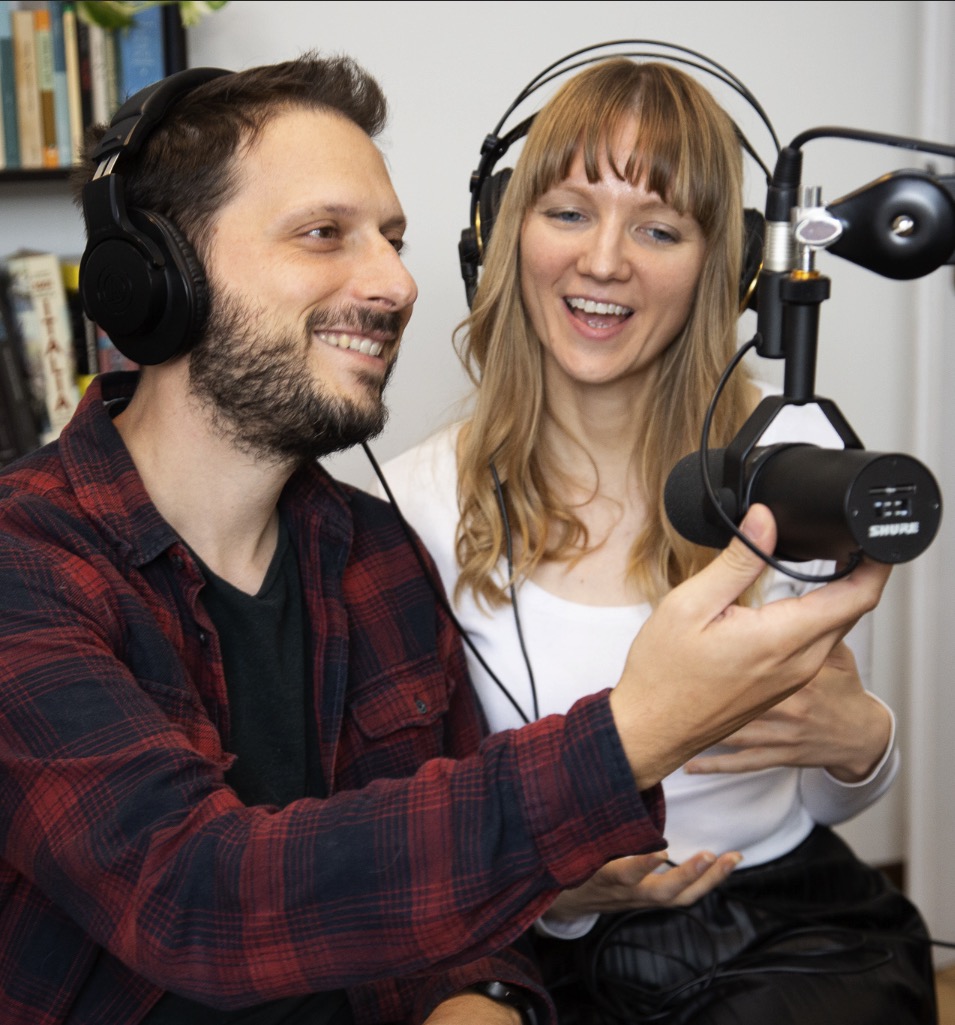
K: Ciao a tutti e benvenuti! Hi everyone and welcome to Learn Italian with Joy of Languages.
M: In today’s episode, you’ll hear how to say “sure” in Italian…
K: But before we get started, we have a little regalo, or gift, for you. We know that just a few phrases can help you a lot to get by in Italy and feel more confident speaking with Italians. So we made you a kit. It's called the Get by in Italy Kit: the phrases to help you get started, a pocket card you can keep on your phone, and a video for every section so you can hear how it all sounds. It's free – the link's in the description.
M: So the first word for “sure” is really useful to show you’re happy to do a favour or help an Italian out in some way.
K: For example if you’re at a restaurant, another customer could ask you posso , “may I”, to check if they can take an empty chair from your table.
M: In this kind of situation, the Italian word you’d say for “sure” would be certo (x2).
K: So certo , spelt c-e-r-t-o, is a bit like the English word certainly. Depending on the situation, you could translate it as “sure”, “of course” or “definitely”. Just watch out for the pronunciation. Certo starts with the letters C-E, but in Italian, C followed by E has a “ch” sound.
M: Certo (x2).
K: You could also say certo if an Italian suggests an idea and you want to show that you like the sound of it.
M: For example, if an Italian asks andiamo al mare?, shall we go to the seaside, you could say certo!
K: There’s another word for “sure” that you can use in Italian to show that you’re happy to go along to something an Italian invites you to.
M: Volentieri (x2).
K: Volentieri, spelt v-o-l-e-n-t-i-e-r-i, sounds like the English “voluntarily”. You’re saying that you’re willing to do something. You could translate it as “gladly” or “I’d love to”.
M: For example, if your Italian relative asks you if you want to go out for lunch, you could say volentieri .
K: But there’s another Italian word you’d use for “sure” if you want to talk about being “sure” about something.
M: Sicuro, if you’re talking to a man. Sicuro . Or sicura , if you’re talking to a woman. Sicura.
K: So sicuro is spelt s-i-c-u-r-o, or if you’re talking to a woman, you add an -a on the end instead of an -o. This one’s useful when an Italian has offered you something and you want to double check that they really don’t mind, like saying “are you sure it’s no trouble” or “are you sure you don’t mind?”.
M: For example, if an Italian said that you could eat l’ultimo pezzo di focaccia, the last piece of focaccia, to check that they really don’t mind, you can say sicuro? Or sicura?
K: Now that you’ve heard a few different words for “sure” in Italian, let’s see what you can remember. What’s a way to say “sure” that’s a bit like the English “certainly”. You can use this to agree to plans, or show you’re happy to do a favour.
M: Certo (x2) .
K: And there’s another word you can use in Italian to show you like the sound of a plan. It’s like the English “voluntarily”.
M: Volentieri (x2).
K: And lastly, if you want to check an Italian’s sure about something what can you ask?
M: Sicuro? To a man. Or Sicura? To a woman.
K: Hopefully you’re starting to get a feel for the different ways Italians say “sure”, and when you can use them when you’re in Italy.
M: And just a little reminder that if you want more handy phrases, you can get them with the free Get By in Italy Kit. You just have to follow the link in the description.
M: See you next time.
K: Or as we say in Italian:
Alla prossima!
Time to check your understanding and remember everything you just learned! Below you’ll find a mini-quiz and some vocabulary cards to help it all go in.
Quiz: “Sure” in Italian: Everyday Phrases Italians Really Use
How much did you learn? Find out in the quiz!
Vocabulary
Sei sicura? = Are you sure? (to a woman)
Sei sicuro? = Are you sure? (to man)
Siete sicuri? = Are you sure? (to a group of men and women)
Siete sicure? = Are you sure? (to a group of women)
Certo = Sure (like the English certainly)
Volentieri = Sure (meaning I’d love to, gladly)
Sicuro? = Sure? (to a man)
Sicura? = Sure? (to a woman)
Not sure how it works? Click here to watch the tutorial