When you're in Italy, to show you’re polite and friendly, you might need to say “sorry” in a few different situations.
Like if you want to react to some sad news that an Italian has told you, or if you want to apologize to your tour guide for being late.
But there isn’t just one way of saying “sorry” in Italian. Here, you’ll see which word for “sorry” you should use depending on the situation.
You’ll also hear how to reply to “sorry”, so you know what to say if an Italian apologizes to you.
Mi dispiace
Pronunciation: Mee dee-SPYAH-cheh
Mi dispiace is a very common way to say “I’m sorry” in Italian, and it literally means “to me it is displeasing”.
Because it sounds more emotional, mi dispiace works well to make “sorry” sound more heartfelt and sincere, a bit like saying “I feel bad”. You can also use it as a way of saying “sorry to hear that”, like when you’re reacting to sad news that an Italian has told you.
And it works in both formal and informal situations, so with friends or people you don’t know well.
Here’s how you might use it or hear it in Italy:
Mi dispiace ma non posso venire stasera. -I’m sorry, but I can’t come this evening.
Mi dispiace, la cucina è chiusa. -I’m sorry, the kitchen is closed.
Mi dispiace per l’attesa. -Sorry about (lit. for) the wait.
Or:
-Il mio cane non sta bene. -My dog’s not well.
-Mi dispiace tanto! -I’m so sorry to hear that! (Lit. I’m so sorry)
Scusa
Pronunciation: SKOO-zah
Scusa also means “sorry” in Italian.
You use scusa as a quick “sorry”, a bit like saying “oops, sorry”, like if you bump into someone or stand on their foot.
You’d use scusa in informal situations, so with friends or people you know well.
Here’s how scusa works in a few examples:
Scusa, non volevo! -Sorry, I didn’t mean to! (lit. I didn’t want to)
Scusa per la confusione. -Sorry for the confusion.
Scusa, non ho capito. -Sorry, I didn’t catch that. (lit. I didn’t understand)
Scusa per il ritardo. -Sorry for being late. (lit. for the delay)
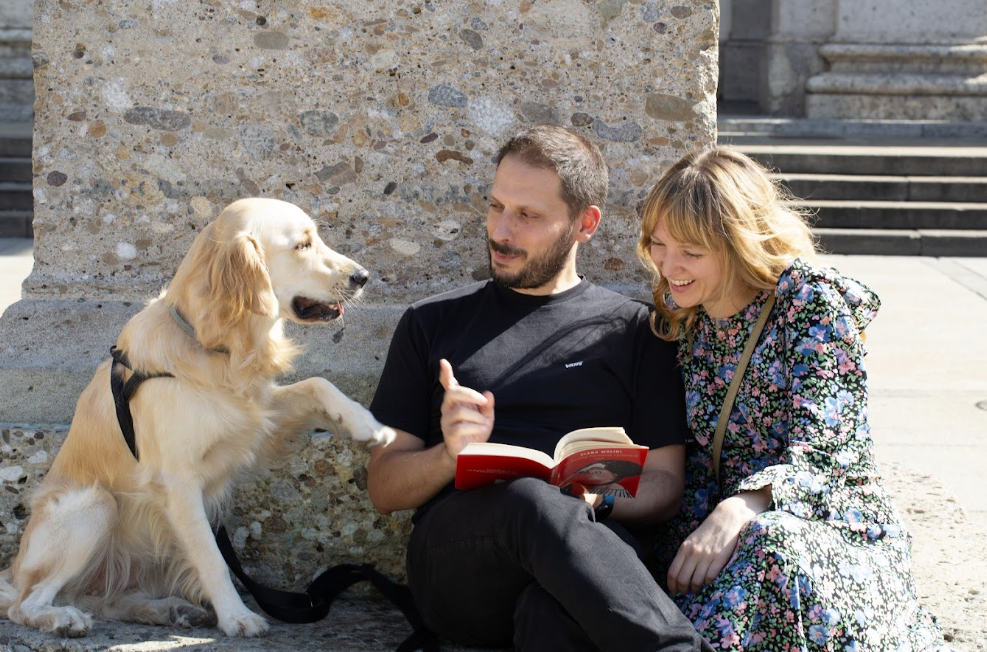
Scusa Brody. Stiamo cercando di leggere. -Sorry, Brody. We’re trying to read.
If you’re thinking, I thought scusa meant “excuse me”, you’re right. Scusa can mean “sorry” or “excuse me” in Italian. You can read more about it on our blogpost: how to say “excuse me” in Italian (with real-life examples) .
Scusi
Pronunciation: SKOO-zee
Scusi is the formal way of saying scusa , so it’s the “sorry” you use with people you don’t know well, like waiters or receptionists.
Here’s how scusi works in a few examples:
Scusi, non volevo. -Sorry, I didn’t mean to (lit. I didn’t want to)
Scusi, non ho capito. -Sorry, I didn’t catch that (lit. I didn’t understand).
Scusi per il disturbo. -Sorry for the inconvenience.
Scusate
Pronunciation: Skoo-ZAH-teh
Scusate is the word for “sorry” in Italian that you use if you’re speaking to two or more people.
Here’s how scusate works in a few example phrases:
Scusate ma devo andare. -Sorry, but I have to go.
Scusate, devo fare una chiamata. -Sorry, I have to make a call.
Scusate, siamo un po’ in ritardo. -Sorry, we’re (running) a bit late.
You can also use scusate to say “sorry” to a group of people if you want to get their attention. It’s a bit like a shorter, more informal way of saying “sorry for the interruption”.
Scusate ma dove andiamo stasera? -Sorry, but where are we going this evening?
If you want to know how this plural “you” works in Italian, you can read our blogpost on You in Italian: Formal vs. Informal Explained .
Scusami
Pronunciation: SKOO-zah-mee
Scusami (lit. “excuse myself”) is very similar to scusa, but adding this mi just adds a bit more emphasis.
Here’s how scusami works in a few example phrases:
Scusami se faccio degli errori in italiano. -Sorry if I make any mistakes in Italian.
Scusami Brody! So che vuoi uscire. -Sorry, Brody! I know you want to go out.
Scusami per prima. Sono molto stanco! -Sorry for earlier. I’m very tired!
Scusami tanto! -I’m so sorry!
Scusatemi
Pronunciation: Skoo-ZAH-teh-mee
Scusatemi is the plural version of scusami, so the “sorry” that you’d use with two or more people. It’s a bit like saying “sorry guys” or “sorry everyone”.
As with scusami, adding the mi (“myself”) to scusate just adds more emphasis.
For example:
Scusatemi, devo solo controllare l’orario del treno. -Sorry, I just have to check the train time.
Scusatemi, arrivo dopo perché devo passare dal supermercato. -Sorry, I’ll arrive later because I have to go by the supermarket.
Scusatemi, non ho tempo per comprare il vino per stasera. -Sorry, I don’t have time to buy the wine for this evening.
Ways to Reply to “Sorry” in Italian
You might not be the only person apologizing in Italy, you might also hear Italians apologize to you.
Here are some replies that you can give:
| Non fa niente | It’s nothing / Don’t worry about it (lit. it does nothing) | Nohn fah NYEN-teh |
| Nessun problema | No problem | Nehs-SOON proh-BLEH-mah |
| Non importa | It doesn’t matter | Nohn eem-POR-tah |
Sorry in Italian and Everyday Phrases: Review
There are a few different ways to say “sorry” in Italian, depending on the situation and who you’re speaking to.
-
Mi dispiace tends to be used in more serious situations.
For example:
Mi dispiace ma non posso venire stasera. - I’m sorry, but I can’t come this evening.
And:
-Il mio cane non sta bene. -My dog’s not well.
-Mi dispiace tanto! - I’m so sorry to hear that!
-
Scusa (informal), scusi (formal) and scusate (plural) are usually used to say “sorry” in less serious situations, sometimes a bit like saying “oops, sorry”.
For example:
Scusa, non volevo! -Sorry, I didn’t mean to! (lit. want to)
Scusi per il disturbo. -Sorry for the inconvenience.
Scusate, siamo un po’ in ritardo. -Sorry, we’re a bit late.
-
Scusami and scusatemi is like scusa and scusate, but with the mi it adds a bit more emphasis.
For example:
Scusami per prima. Sono stanco! -Sorry about earlier. I’m tired.
Scusatemi, devo solo controllare l’orario del treno. -Sorry, I just have to check the train time .
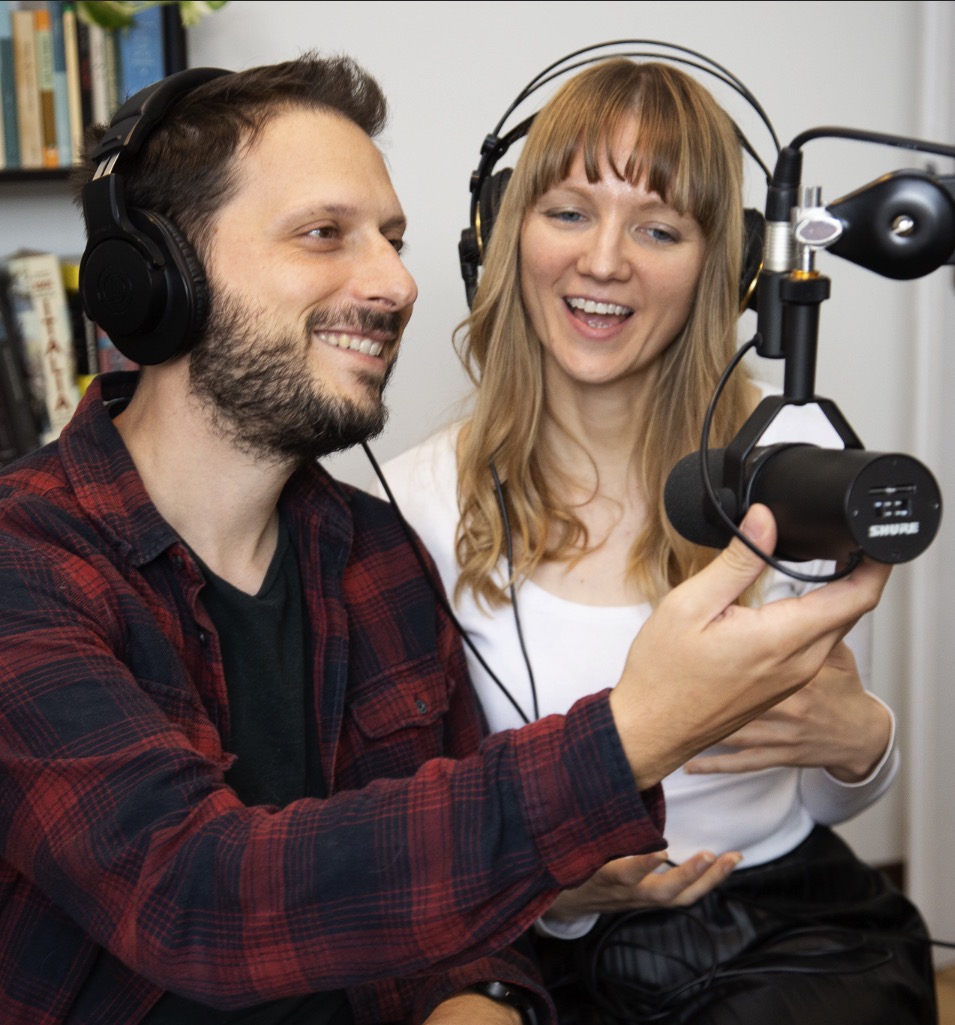
K: Ciao a tutti e benvenuti! Hi everyone and welcome to Learn Italian with Joy of Languages.
M: In today’s episode, you’ll hear three different ways to say sorry in Italian and how you can use them in everyday phrases.
K: But before we get started, can we ask you a quick favore ? If you’re listening to this on your podcast app, could you click the subscribe or follow button? This way you’ll get notified when we release a new episode and you’ll help our podcast grow so we can keep making free lessons like this. Grazie !
K: So, the first word for “sorry” is:
M: Mi dispiace (x2) .
K: Mi dispiace literally means “to me it is displeasing”. And because it means that you’re displeased or unhappy about something, it sounds a bit more emotional, so if you wanted to say you’re sorry you can’t come to a lunch an Italian invites you to, you’d use this one, or you’d use it if an Italian told you some bad news.
M: For example, if an Italian told you that they had to take their dog to the vet, like we often have to do when Brody decides to swallow something non-edible, you could say mi dispiace. Or if they tell you that a relative is in hospital, you could say mi dispiace here too.
K: If you want to say “I’m so sorry” in Italian, there are two ways you can say it.
M: You can say mi dispiace tanto (x2). Or you could say mi dispiace molto (x2).
K: When you say either mi dispiace tanto or mi dispiace molto, you’re literally saying “to me it is displeasing a lot”.
M: And if you want to say you’re sorry for or about something in Italian, you’d say mi dispiace per. For example mi dispiace per questo. Sorry about that. Mi dispiace per questo.
K: But if you just want to say a quick sorry, a bit like “oops, sorry”—for example, if you accidentally bump into someone or step on their toe—there’s another word you’d use in Italian.
M: Here, you’d say scusi, with an -i on the end. Scusi.
K: You might be thinking, “doesn’t that mean excuse me”, and you’d be right. Depending on the context, scusi can mean either “excuse me” or “sorry”.
M: For example, if you’ve arrived a bit late for your walking tour, you could tell the tour guide scusi per il ritardo. Sorry for being late. Literally:
Scusi - sorry
Per - for
Il - the
Ritardo - lateness
Scusi per il ritardo
K: But scusi is what you’d use if you’re talking to someone that you don’t know very well.
M: If you’re speaking to a friend or an Italian that you know well, you’d say: scusa, with an -a on the end. Scusa. So if you were late to dinner at a friend’s house, you’d say scusa per il ritardo (x2) .
K: We wouldn’t use mi dispiace here because mi dispiace is a bit stronger, so you wouldn’t use it for just a small mistake.
M: Now that you’ve heard a few different ways of saying “sorry” in Italian, let’s see what you can remember.
K: What’s one common way to say “sorry” that you can use if you feel bad about something, like not being able to accept an invite to a lunch, or hearing some bad news.
[...]
M: Mi dispiace (x2) .
K: And if you want to say that you’re really sorry, what are two ways you can say it?
[...]
M: Mi dispiace tanto (x2) . Or mi dispiace molto (x2). K: How would you say “I’m sorry about that” in Italian?
[...]
M: Mi dispiace per questo (x2).
K: And what about the formal word for “sorry” you’d use if you were just giving a quick “whoops sorry”? You’d also hear it in the phrase “Sorry for being late”.
[...]
M: Scusi (x2) . For example, scusi per il ritardo.
K: And what about the informal word for this type of “sorry”, the one that you’d use with friends or people you know well.
M: Scusa (x2) . For example, scusa per il ritardo.
K: You’ve heard three different ways to say “sorry” in Italian, but there are a few other ways to say “sorry” that you’d have to use in certain situations.
M: Like what “sorry” to use if you’re talking to more than one person, or a word for “sorry” that gives your apology a bit more emphasis.
K: You can find the different words for “sorry” that you need in Italy on our website. You’ll also see different ways to reply when an Italian says “sorry” to you, so you can sound warm and friendly.
M: Just click the link in the description to head over to our website, or go to italian.joyoflanguages.com/podcast and search for episode 234.
K: See you next time.
M: Or as we say in Italian.
Alla prossima!
Time to check your understanding and remember everything you just learned! Below you’ll find a mini-quiz and some vocabulary cards to help it all go in.
Quiz: Sorry in Italian and Everyday Phrases to Apologize
How much did you learn? Find out in the quiz!
Click here to take the quiz for this episode: Sorry in Italian and Everyday Phrases to Apologize
Vocabulary
Mi dispiace per l’attesa = Sorry about (lit.for) the wait
Scusa, non ho capito = Sorry, I didn’t catch that
Scusami se faccio degli errori in italiano = Sorry if I make mistakes in Italian
Scusi per il disturbo = Sorry (formal) for the inconvenience
Scusate, ma devo andare = Sorry (you plural), but I have to go
Scusatemi, devo solo controllare l’orario del treno = Sorry, I just have to check the train time
Mi dispiace tanto = I’m so sorry
Mi dispiace per questo = I’m sorry about (lit. for) that
Scusa per il ritardo = Sorry for being late (lit. for the lateness)
Scusi per il ritardo = Sorry (formal) for being late (lit. for the lateness)
Not sure how it works? Click here to watch the tutorial