Magari is a little word that Italian learners often hear in Italy and wonder what it means.
Magari isn’t one of those untranslatable expressions ( phew… ). There are equivalent words that we can use to translate it in English.
But because the two ways we translate magari are quite different from each other and are used in different contexts, learners often get confused about what the word actually means.
In this post, you’ll find out exactly what magari means and how you can use it in Italy.
Magari = Maybe
Magari (pronounced: mah-GAH-ree) can mean “maybe” in Italian.
You can use it if you want to say something is possible, but you’re not 100% sure.
For example:
-Il negozio sembra chiuso -The shop looks closed
-Magari perché è ora di pranzo -Maybe because it’s lunchtime
And:
Katie non risponde al telefono. Magari sta lavorando. -Katie’s not answering the (lit. to the) phone. Maybe she’s working.
You can also use magari in Italian as a hopeful “maybe”. You’re not certain something will happen, but you’d like it to.
For example:
Magari non è necessario prenotare -Maybe (i.e. hopefully) it’s not necessary to book
Magari oggi ci sono meno turisti -Maybe (i.e. hopefully) there are fewer tourists
Magari c’è un tavolo per due -Maybe (i.e. hopefully) there’s a table for two
Like in English, you can use magari to mean “maybe” when you want to suggest a plan, but don’t want to sound too forceful. By using the word “maybe”, you’re leaving room for other options.
For example:
Magari possiamo andare al cinema stasera? -Maybe we could (lit. we can) go to the cinema this evening?
Questo weekend andiamo al mare, magari? -This weekend, shall we go to the beach maybe?
Magari possiamo pranzare in quel ristorante sulla spiaggia -Maybe we can have lunch at (lit. in) that restaurant on the beach
Magari sì, magari no = Maybe yes, maybe not
You can say magari sì and magari no to say “maybe yes” and “maybe not” in Italian.
Just watch out for a small difference between the English and Italian. When you say magari no in Italian, you’re literally saying “maybe no” and not “maybe not”.
For example:
-Andiamo a Parma in macchina? - Shall we go to Parma by car?
-Magari sì, se non c’è troppo traffico -Maybe yes, if there isn’t too much traffic
And:
-Hanno un tavolo per stasera? -Do they have a table for this evening?
-Magari no, chiamo per chiedere -Maybe not, I’ll call to ask
Magari = If only
You can use magari in an ironic, jokey way to mean “if only!”. It’s a way of that you think something is unlikely, but it would be great if it was true.
For example:
-Vai in Italia quest’estate? -Are you going to Italy this summer?
-Magari! -If only!
And:
-Hai una casa in Toscana? -Do you have a house in Tuscany?
-Magari! -If only!
You just want to be careful if you want to continue the sentence after magari. For example, if you wanted to say something like: “If only I could go to Italy”.
If you do this, you have to end up using a complicated grammar point that even confuses Italians sometimes (it’s called the congiuntivo imperfetto , in case you’re interested, and as its name suggests it’s not easy).
To avoid being tangled up with difficult grammar, if you do want to continue the sentence, you can use the phrase sarebbe bello (it would be nice) instead.
For example:
-Vai in Italia quest’estate? -Are you going to Italy this summer?
-Sarebbe bello andare, ma non posso quest’anno -It would be nice to go, but I can’t this year
And:
Hai una casa in Toscana? -Do you have a house in Tuscany?
Sarebbe bello avere una casa in Italia, ma per ora stiamo sempre in hotel -It would be nice to have a house in Italy, but for now we always stay in hotels
Magari in Italian: What it Means and How to Use It: Review
-
Magari = Maybe
You can use magari to mean “maybe” in Italian. It shows that you’re not sure that something will happen. Sometimes it can have the sense of you’re not sure it will happen, but you hope it does.
For example:
-Il negozio sembra chiuso -The shop looks closed
-Magari perché è ora di pranzo -Maybe because it’s lunchtime
And:
Magari oggi ci sono meno turisti -Maybe (i.e. hopefully) there are fewer tourists
-
Magari sì, magari no = Maybe yes, maybe not
You can use magari sì and magari no in Italian to say “maybe yes” and “maybe not”.
For example:
-Andiamo a Parma in macchina? - Shall we go to Parma by car?
-Magari sì, se non c’è troppo traffico -Maybe yes, if there isn’t too much traffic
And:
-Hanno un tavolo per stasera? -Do they have a table for this evening?
-Magari no, chiamo per chiedere -Maybe not, I’ll call to ask
-
Magari = If only
Magari can mean “if only” in Italian. It’s handy to be jokey and friendly with Italians.
For example:
-Vai in Italia quest’estate? -Are you going to Italy this summer?
-Magari! -If only!
Just remember to say sarebbe bello if you want to continue the phrase to avoid saying very complicated grammar.
For example:
-Vai in Italia quest’estate? -Are you going to Italy this summer?
-Sarebbe bello andare, ma non posso quest’anno -It would be nice to go, but I can’t this year
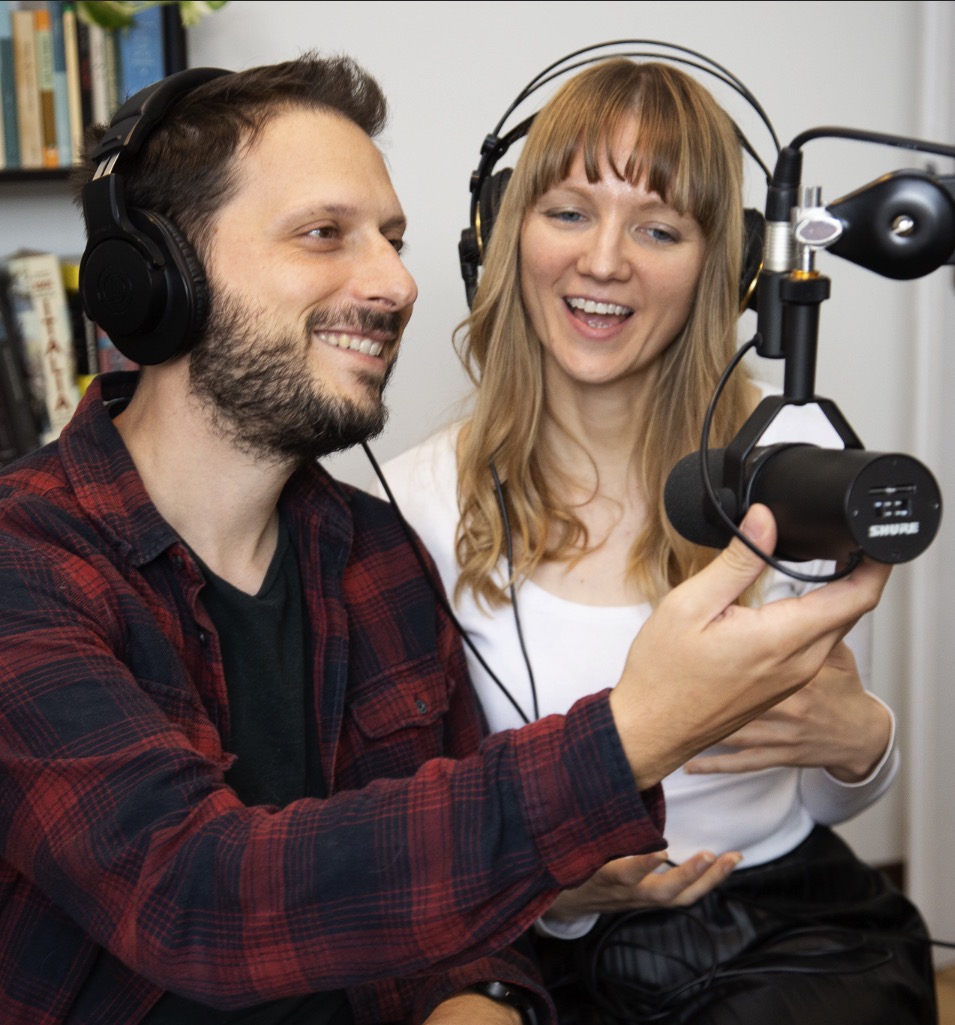
K: Ciao a tutti e benvenuti! Hi everyone and welcome to “Learn Italian with Joy of Languages”.
M: In today’s episode, you’ll learn what magari means and the kind of everyday situations where Italians use it.
K: But before we get started, can we ask you a quick favore ? If you’re listening to this on your podcast app, could you click the subscribe or follow button? This way you’ll get notified when we release a new episode and you’ll help our podcast grow so we can keep making free lessons like this. Grazie!
M: You’re going to hear a conversation between me and Katie where we talk about going to an island in Italy called Procida.
K: Procida is near Naples, where Matteo is from, and you go there by boat. When we’re in Naples, it’s one of our favourite things to do.
M: When we talk about going there, we use the word magari in a few different ways. See if you can start to get a feel for its different meanings.
M: Andiamo a Procida?
K: Sì e magari possiamo pranzare in quel ristorante sulla spiaggia.
M: Eh, ma non abbiamo prenotato.
K: Magari troviamo un tavolo comunque?
M: Magari! È sempre pieno.
K: Però ora è bassa stagione… quindi magari c'è un tavolo per due.
M: Mm… magari sì, provo a telefonare.
K: So Matteo started by asking:
M: Andiamo a Procida? - Shall we go to Procida? Literally:
Andiamo - let’s go
A - to
Procida?
K: You might have heard of other islands near Naples, like Capri or Ischia. Those ones are more well-known, so lots of tourists go there. But Procida is a nice choice because although it does get a lot of tourists nowadays, they tend to be Italian, so you get a more authentic experience. And it’s a really pretty island, with lots of coloured houses.
M: It’s also traditionally a fisherman’s island. So you can get very good seafood there.
K: And speaking of good food, I said:
M: Sì e magari possiamo pranzare in quel ristorante sulla spiaggia - Yes and maybe we can have lunch at that restaurant on the beach. Literally:
Sì - yes
E - and
Magari - maybe
Possiamo - we can
Pranzare - to have lunch
In - in
Quel - that
Ristorante - restaurant
Sulla - on the
Spiaggia - beach
K: One thing that’s handy about Italian is that they just have one word which means “to have lunch”: pranzare . In English, we have to use three words to say the same thing.
M: Katie also used the word magari in a way where in English we’d say “maybe”. Magari possiamo pranzare - maybe we can have lunch.
K: So simply, we could say that magari means “maybe”. But if we want to go into a bit more detail, here we see how magari is being used to suggest a plan that you think sounds nice. And by adding the idea of “maybe”, you’re not being too pushy. You’re leaving room for other options.
M: If you want to use magari in this sense, knowing the phrase that you heard here, magari possiamo is very useful, because you can use it when you want to suggest other plans as well. Like if an Italian asked you what you wanted to do at the weekend, you could say magari possiamo andare al cinema? - maybe we can go to the cinema? Magari possiamo andare al cinema.
K: Although you’ve just heard how to use magari in a bit more detail, it’s not different to how we’d use “maybe” in English. In both Italian and in English we’re using the word to suggest a plan in a way that doesn’t sound too forceful.
Going back to the restaurant on the beach, Matteo said:
M: Eh, ma non abbiamo prenotato - Yeah, but we haven’t booked. Literally:
Eh - yeah or hmm
Ma - but
Non - not
Abbiamo - we have
Prenotato - booked
K: I was hopeful this wouldn’t be a problem, so I said:
M: Magari troviamo un tavolo comunque? - Maybe we’ll find a table anyway? Literally:
Magari - maybe
Troviamo - we find
Un - a
Tavolo - table
Comunque - anyway
K: Again, we’re using magari to mean “maybe”. This time there’s a slight difference in how we’re using it compared to the first time. I used it because I was hopeful the situation would be that way.
M: You could use it in other situations in Italian to show that you’re hopeful that something will turn out a certain way. For example, if you wanted to go to the museum, you could say magari oggi è aperto - maybe today it’s open. You’re not sure whether it is or not, and by using magari , you’re adding that small nuance of “I hope it is”.
K: Then Matteo said:
M: Magari! È sempre pieno. - If only! It’s always full! Literally:
Magari - if only
È - it is
Sempre - always
Pieno - full
K: Using magari to mean “if only” is really common in Italian. It’s a way of joking a bit if someone says something that you think is unlikely, but it would be great if it was true. Sometimes it might also work to translate it as “I wish” or “yeah right”.
M: If someone asked you if you were going on holiday to Italy this summer, you might say magari! If only! You know you can’t go, but you’d really like to.
K: Because “if only” doesn’t feel very related to “maybe”, magari can confuse learners. But in real conversations with Italians, the meaning is usually clear from the situation and the tone.
K: Still hopeful there might be a table at the restaurant in Procida, I said:
M: Però ora è bassa stagione - but now it’s off-season. Literally:
Però - but
Ora - now
È - it is
Bassa - low
Stagione - season
K: And then I added:
M: quindi magari c'è un tavolo per due - so maybe there’s a table for two.
Quindi - so
Magari - maybe
C’è - there is
Un - a
Tavolo - table
Per - for
Due - two
K: Here, I’m again using magari to say “maybe” with the idea that I’m hopeful that it’s the case.
Then Matteo said:
M: Mm… magari sì, provo a telefonare - Mm…maybe yes, I’ll try and call. Literally:
Mm
Magari - maybe
Sì - yes
Provo - I try
A - to
Telefonare - to telephone
K: You heard magari being used with sì, to mean “maybe yes”, which is a useful short phrase to know in Italian.
M: Magari sì (x2)
M: You’ve heard a couple of different translations for magari in Italian.
K: The important thing to remember is that you don’t have to know all the different shades of meaning. Just know that magari can mean “maybe” or “if only” in English. As you hear it more and more in Italian, you’ll start to get used to some of the more subtle differences in how you can use it.
M: Let’s see if you can remember some of the different ways that you can use magari that you heard in this episode.
K: What’s the Italian for “maybe we can…”? This one’s useful when you want to suggest a plan.
[...]
M: Magari possiamo… . For example, magari possiamo pranzare sulla spiaggia - maybe we can have lunch on the beach.
K: What would it mean if we said magari troviamo un tavolo?
[...]
M: Maybe we’ll find a table. Magari troviamo un tavolo. This is when you use magari to say that you’re not sure about something, but you’re hoping it turns out that way. We also saw it in the phrase magari c’è un tavolo per due - maybe there’s a table for two.
K: And what’s the Italian for “maybe yes”?
[...]
M: Magari sì (x2)
K: And lastly, what does magari mean if we use it as an exclamation?
[...]
M: If only! Like if someone asked you if you were going to Italy in the summer, you can say magari!
K: Let’s listen to the whole conversation again.
M: Andiamo a Procida?
K: Sì e magari possiamo pranzare in quel ristorante sulla spiaggia.
M: Eh, ma non abbiamo prenotato.
K: Magari troviamo un tavolo comunque?
M: Magari! È sempre pieno.
K: Però ora è bassa stagione… quindi magari c'è un tavolo per due.
M: Mm… magari sì, provo a telefonare.
K: Over on our blogpost, you’ll see all the explanations for magari written down, so you can go back and read them at your own pace as many times as you like.
M: There are also lots of example phrases with magari that are good to know before your next trip to Italy.
K: Just click the link in the description to head over to our website, or go to italian.joyoflanguages.com/podcast and search for episode 215.
M: See you next time.
K: Or as we say in Italian.
Alla prossima!
Time to check your understanding and remember everything you just learned! Below you’ll find a mini-quiz and some vocabulary cards to help it all go in.
Quiz: Magari in Italian
How much did you learn? Find out in the quiz!
Click here to take the quiz for this episode: Magari in Italian
Vocabulary
Magari non è necessario prenotare = Maybe (hopefully) it’s not necessary to book
Magari oggi ci sono meno turisti = Maybe (hopefully) there are fewer tourists
Magari possiamo andare al cinema stasera? = Maybe we could go to the cinema this evening?
Questo weekend andiamo al mare, magari? = This weekend, shall we go to the beach maybe?
Magari sì, se non c’è troppo traffico = Maybe yes, if there isn’t too much traffic
Sarebbe bello avere una casa in Italia = It would be nice to have a house in Italy
Magari possiamo pranzare in quel ristorante sulla spiaggia = Maybe we can have lunch at that restaurant on the beach
Magari troviamo un tavolo comunque = Maybe we’ll find a table anyway
Magari c'è un tavolo per due = Maybe there’s a table for two
Flashchards: Magari in Italian
Not sure how it works? Click here to watch the tutorial