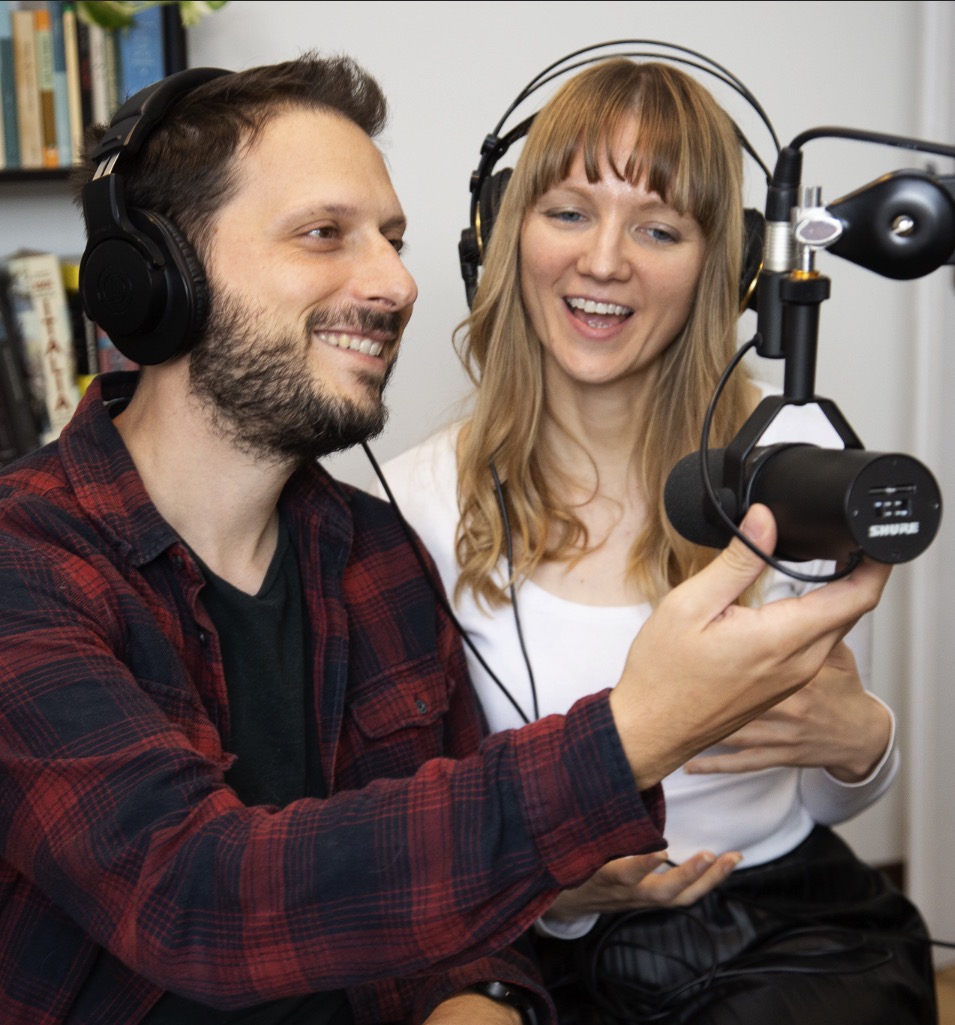
When you’re in Italy and you try saying Italian phrases, you might make mistakes. Maybe even lots of them!
And it’s not a problem at all because you learn from your mistakes and the important thing is for Italians to understand you.
But if you can avoid some of the really common mistakes that tourists often make, you’ll sound more natural and blend in more with Italians.
And by seeing the most common tourist mistakes here first, you can avoid making them when you’re next in Italy.
Tourists say: Voglio
Italians say: Vorrei
It’s common for tourists to say voglio (“I want”) when they’re doing things like ordering drinks or buying food at the market.
But voglio can come across as a bit demanding. So to sound more polite, you can say vorrei.
For example:
Vorrei un etto* di prosciutto per favore. -I’d like 100 grams of prosciutto please.
Vorrei questo formaggio per favore. Come si chiama? -I’d like this cheese please. What’s it called?
Vorrei il risotto al gorgonzola. -I’d like the gorgonzola risotto.
*Italians often use un etto as a measurement, especially when ordering meat or cheese.
Tourists say: un spritz
Italians say: uno spritz
A spritz is a great thing to order in Italy for an aperitivo, when you have drinks and nibbles.
When tourists order “a spritz”, many of them say un spritz , but the correct way to say it is uno spritz.
Italians would understand you if you said this, so non preoccuparti (don’t worry), but to make sure to say it correctly in Italian, you should use uno and not un.
For example you could say:
Vorrei uno spritz. -I’d like a spritz.
Quando sei in Italia, devi provare uno spritz! -When you’re in Italy, you have to try a spritz!
The reason we need to use uno is because in front of a word that starts with sp in Italian, uno is the word we have to use for “a/an”.
Here’s how it works with some other Italian words starting with sp :
Vediamo uno spettacolo stasera. -We’re seeing a show this evening.
Facciamo uno spuntino prima di partire. -Let’s have (lit.do) a snack before leaving.
Mi consiglia uno spumante locale? -Can you (formal) recommend a local sparkling wine?
If the difference between un and uno seems confusing, you can read about it in more detail in this lesson Italian indefinite articles: un, una, uno, and un’.
Tourists say: Scusi
Italians say: Permesso
You can definitely say scusi to mean “excuse me” in Italian, but tourists sometimes think that it’s the word for “excuse me” in every scenario.
Italians actually have another word for “excuse me” when they’re trying to get past and that’s the word permesso (pronounced: pehr-MEHS-soh).
Permesso literally means “permission” so it’s a bit like saying “permission to pass through”. For example, you could say permesso if you’re trying to pass through a line of people, or if you need to squeeze past someone on a crowded train.
You can see more examples of this in our lesson how to say “excuse me” in Italian .
Tourists say: Delizioso!
Italians say: Buonissimo!
It’s nice to show you appreciate food in Italy. It’s a way to be friendly and connect with Italians.
But although delizioso isn’t wrong to say in Italian, it’s not the most natural way to say it.
Italians would usually say buonissimo if they really liked something, or buonissima if they’re describing a feminine dish.
For example:
Questo salame è buonissimo! -This salame is delicious!
Questa pasta e fagioli è buonissima! -This pasta with beans is delicious!
Questa focaccia è buonissima! -This focaccia is delicious!
💡Good to know : Buonissimo/a is the word buono/a (Italian for “good”) with - issimo added to the end to make it mean “very good”.
Tourists say: Non capisco
Italians say: Non ho capito
If you didn’t quite understand something that an Italian told you, the best phrase is non ho capito. Literally: “I haven’t understood”. It’s a bit like saying “I didn’t get that” or “I didn’t catch that”.
For example:
Scusi, non ho capito. Può ripetere? -Sorry, I didn’t get that. Can you (formal) repeat?
Scusi, non ho capito l’ultima parola. -Sorry, I didn’t catch the last word.
Sometimes tourists think that non capisco (literally “I don’t understand”) is the best phrase to use, but that means that you don’t understand something in general (like la burocrazia italiana maybe 😅) rather than something that’s just been said.
Tourists say: un espresso
Italians say: un caffè
If you want to have a shot of coffee, the most natural Italian way to say it is un caffè, literally “a coffee”.
Espresso is an Italian word, but Italians assume that’s what you want if you say un caffè, so Italians usually don’t specify.
Here’s how you might use it:
Due caffè per favore . -Two espressos please.
Un caffè e un cappuccino per favore. -An espresso and a cappuccino please.
Posso avere un caffè e un cornetto? -Can I have an espresso and a croissant?
In this video, Katie and Matteo explain some of the different coffee types you can get in Italy.
Tourists say: Ho un caffè
Italians say: Prendo un caffè
When you talk about “having” something that’s food or drink related in Italian, you often use the verb prendere, which means “to take”.
Tourists sometimes get this wrong because they translate literally from the English and think they should use Italian for “have” instead.
For example, you could say:
Prendo sempre un cappuccino la mattina. -I always have (lit. take) a cappuccino in the morning.
Prendiamo un gelato? -Shall we have an ice-cream?
You can also use prendere as a really useful word for ordering. It’s like saying “I’ll have” or “I’ll get”.
For example:
Prendo le polpette. -I’ll have the meatballs.
Prendiamo i ravioli di zucca. -We’ll have the pumpkin ravioli.
Tourists say: Albero
Italians say: Albergo
The words albero and albergo look very similar, so it’s easy to see why tourists mix them up. But they mean very different things.
Albero means “tree” and albergo means “hotel”.
For example:
L’albergo è in centro -Our hotel is in the city centre.
L’albergo è lontano dalla stazione. -The hotel is far from the station.
Tourists say: È caldo
Italians say: Fa caldo
If you’re going to Italy, it’s handy to know how to talk about the weather so you can make small talk with Italians.
To say “it’s hot”, tourists sometimes translate literally from English and say è caldo, but the correct way to say it in Italian is fa caldo (literally “it makes hot”).
Here’s how you might use it:
A Milano fa troppo caldo oggi. -In Milan it’s too hot today.
In Italia, fa caldo in estate. -In Italy, it’s hot in the summer.
And if you’re wondering how to say “it’s cold” in Italian, it works in a similar way. You don’t say è freddo , but fa freddo (literally “it makes cold”).
For example:
A Torino fa freddo in inverno. -In Turin it’s cold in the winter.
Tourists say: Mamma mia! (all the time)
Italians say: Mamma mia! (sometimes)
Mamma mia seems like the classic Italian expression so tourists like to use it to sound like the locals.
And Italians do use mamma mia , just not all the time. You use it more to show strong emotions, like if you’re really surprised, shocked or annoyed about something.
For example, you could say:
Mamma mia, che bel bambino! -My goodness, what a beautiful baby!
Mamma mia, che caldo! -My goodness, it’s so hot! (lit. how hot!)
Mamma mia, queste zanzare sono molto fastidiose! -My goodness, these mosquitos are very annoying.
Mamma mia, questo traffico è infinito! -My goodness, this traffic is never-ending (lit. infinite)!
Tourists say: Visito la mia famiglia
Italians say: Vado a trovare la mia famiglia
If you have origini italiane (Italian origins) you might be going to Italy to visit your family. Or maybe you’re chatting to Italians about your plans to visit family soon.
If you’re talking about visiting your family in Italian, you don’t actually use the verb visitare (“to visit”), which is a mistake tourists sometimes make.
Instead, in Italian you’d say vado a trovare (literally “I’m going to find”).
For example:
Quest’estate vado a trovare i miei cugini in Italia. -This summer, I’m going to visit my cousins in Italy.
Questo weekend vado a trovare i miei nipoti. -This weekend, I’m going to visit my grandchildren.
Tourists say: Viaggio a Italia
Italians say: Vado in Italia
When they’re trying to say “I’m travelling to Italy”, tourists sometimes say viaggio a Italia because it’s a literal translation of the English.
But the more natural way to say this in Italian would be vado in Italia (literally “I’m going in Italy”). Or you could say faccio un viaggio in Italia (literally: “I’m making a trip in Italy”).
For example:
Vado in Italia per festeggiare il mio compleanno. -I’m going to Italy to celebrate my birthday.
Vado in Italia per il matrimonio di mio figlio. -I’m going to Italy for my son’s wedding.
L’anno prossimo faccio un viaggio in Italia. -Next year, I’m going on a trip to Italy.
💡Good to know: You use in when talking about going to countries in Italian and a when you’re talking about towns or cities. For example, vado a Roma (“I’m going to Rome) and vado in Italia (“I’m going to Italy”)
Tourists say: Una pizza con i pepperoni
Italians say: Una diavola
Pepperoni pizza isn’t actually a classic type of Italian pizza, so you’re unlikely to find it on the menu in an authentic Italian pizzeria.
In fact, “pepperoni” isn’t even an Italian word. The closest word is probably peperone (plural: peperoni ) which is the Italian for bell peppers.
If you do want to order something similar to a pepperoni pizza, you could order una diavola. It’s a pizza with spicy salami on top.
So you could say:
Vorrei una diavola per favore. -I’d like a diavola please.
Prendiamo una diavola da asporto? -Shall we get a diavola to take away?
To see what diavola means in Italian, and read about other authentic pizza types, you can try this lesson: order your favorite pizza in Italian: the sentences you need .
Tourists say: Tutto è bene
Italians say: Tutto bene
Italians use the phrase tutto bene (“all good”) a lot.
For example, a waiter might ask tutto bene? to check everything’s ok with your meal. Or you can ask your friends or people you know well tutto bene? as a way of saying “how are you?” or “how’s it going?”.
Sometimes tourists respond to this question by saying tutto è bene, literally “everything is good”. This makes sense in English, but in Italian you’d just reply with tutto bene (literally “all good”), without the “is”.
For example, you could say:
Sì, tutto bene! -Yes, all good!
Tutto bene grazie. -All good thank you.
Tourists say: Siamo tre
Italians say: Siamo in tre
If you arrive at a restaurant and ask for a table in Italy, it can be hard to know how to say a phrase like “there are three of us” because you wouldn’t translate this literally in Italian .
The most natural way to say “there are three of us” in Italian is siamo in tre (literally: “we are in three”) .
Sometimes tourists forget the in and just say siamo tre.
Here’s how you might use this phrase in Italy:
C’è un tavolo libero per stasera? Siamo in tre. -Is there a free table for this evening? There are three of us.
Or
-In quanti siete? -How many of you are there (lit. in how many are you)?
-Siamo in tre. -There are three of us (lit. we are in three).
Tourists say: cenare al fresco
Italians say: cenare fuori
Sometimes tourists talk about dining al fresco as a phrase for eating outside .
But Italians don’t tend to use this. Instead, they’d likely say fuori, which is Italian for “outside”, or all’aperto (literally “in the open”).
For example, a waiter could ask you:
Preferite fuori o dentro? -Do you (plural) prefer outside or inside?
Or you might say:
Ceniamo all’aperto stasera? -Shall we have dinner outside this evening?
Fresco actually means “cool” or “chilly” in Italian. For example you could say:
Fa fresco oggi. -It’s chilly today.
So if you say ceniamo al fresco, it could mean “lets eat in a cool place”, but fresco is also an Italian slang word for prison, so it could also mean “let's have dinner in prison” 😅.
Pronunciation
For this next bit, you’ll see some words that tourists commonly pronounce wrong. We’re not saying you have to have the perfect Italian accent, but if you know how to say things in a more Italian way, you’ll sound less like a tourist and Italians will understand you better.
Tourists say: Broo-SHET-tah
Italians say: Broo-SKEHT-tah
Bruschetta (the toasted bread with toppings like tomatoes and olive oil) is often mispronounced by tourists.
When you have the letters ch next to each other in Italian, it makes a “k” sound. Here are some other Italian words you might know that follow the same rule:
-
Gnocchi (NYOH-kkee) - potato dumpling
-
Chianti (KYAN-tee) - a region in Tuscany and type of wine
-
Zucchine (tsook-KEE-neh) - zucchini / courgettes
-
Chilo (KEE-loh) - kilo
Tourists say: Far-MAH-chee-ah (farmacia)
Italians say: Far-mah-CHEE-ah (farmacia)
It’s really common for tourists to put the stress in the wrong place in farmacia (“pharmacy”).
In Italian, the stress often falls on the syllable before the ending.
So it’s far-mah-CHEE-ah, not far-MAH-chee-ah.
A handy way to remember how to pronounce farmacia is to think about another Italian word you might already know how to say: pizzeria .
And here are some other common Italian words that work in a similar way:
-
Gelateria (jeh-lah-teh-REE-ah) - ice-cream shop
-
Panetteria (pah-neh-teh-REE-ah) - bakery
-
Biglietteria (bee-lyeht-teh-REE-ah) - ticket office
Tourists say: GRAHTS-ee
Italians say: GRAHTS-yeh
Grazie is a word you’ll use all the time in Italy, but tourists often get the pronunciation wrong.
The Italian way to say it is GRAHTS-yeh. Sometimes tourists don’t pronounce the -e on the end, or they make it sound more like an a (like GRAHTS-ee-yah ).
This can happen with grazie mille as well, so it’s not: GRAHTS-ee MEEL-leh or GRAHTS-ee-yah MEEL-leh, but GRAHTS-yeh MEEL-leh.
You can listen to the Italian way to pronounce grazie in our podcast how to say thank you in Italian: the most useful phrases.
Tourists say: DOH-veh ( dov’è )
Italians say: Doh-VEH ( dov’è )
Dove is Italian for “where”, and dov’è means “where is”.
Tourists often pronounce both of these in the same way, but there’s a difference.With dove, the stress is more on the first part, so:
DOH-veh
But with dov’è, the last part is more emphasized, so Italians say:
doh-VEH
You’ll also open your mouth a little more on the final -è sound.
You’ll hear this stronger “eh” sound in lots of Italian words with -è, like:
-
Caffè (Kaf-FEH) - coffee
-
Perché (Pehr-KEH) - why
Tourists say: POR fah-VOR
Italians say: PER fah-VOH-reh
Lots of tourists accidentally say por favor instead of per favore .
Probably because many people have heard the Spanish phrase por favor before, so the sounds get mixed up.
And per favore is a phrase you’ll be using all the time in Italy any time you ask for something and want to make sure you sound polite.
For example:
Un arancino per favore. -An arancino (stuffed risotto ball) please.
Il conto per favore. -The bill please.
Possiamo avere un’altra bottiglia d’acqua per favore? -Can we have another bottle of water please?
22 Italian Phrases Tourists Often Get Wrong: Review
Let’s review the different Italian phrases tourists get wrong and what you should say instead.
| Tourists say | Italians say | English |
| Voglio | Vorrei | I would like |
| Un spritz | Uno spritz | A spritz |
| Scusi | Permesso | Excuse me (asking to pass through) |
| Delizioso | Buonissimo | Delicious |
| Non capisco | Non ho capito | I don’t understand/I didn’t catch that |
| Un espresso | Un caffè | An espresso |
| Albero | Albergo | Hotel |
| È caldo | Fa caldo | It’s hot |
| Mamma mia! (all the time) | Mamma mia! (sometimes) | My goodness! |
| Visito la mia famiglia | Vado a trovare la mia famiglia | I’m visiting my family |
| Viaggio a Italia | Viaggio in Italia | I’m going / travelling to Italy |
| Una pizza con i peperoni | Una diavola | Pizza with spicy salami |
| Tutto è bene | Tutto bene | All good |
| Siamo tre | Siamo in tre | There are three of us |
| Abbiamo un caffè | Prendiamo un caffè | Let’s have a coffee |
| Cenare al fresco | Cenare fuori / all’aperto | To have dinner outside |
Here are the different Italian phrases that tourists often pronounce wrong:
| Italian word | Tourists say | Italians say | English |
| Bruschetta | Broo-SHET-tah | Broo-SKEHT-tah | Toasted bread with toppings |
| Farmacia | Far-MAH-chee-ah | Far-mah-CHEE-ah | Pharmacy |
| Grazie | GRAHTS-ee | GRAHTS-yeh | Thank you |
| Dov’è | DOH-veh | Doh-VEH | Where is |
| Per favore | POR fah-VOR | PEHR fah-VOH-reh | Please |
K: Ciao a tutti e benvenuti! Hi everyone and welcome to Learn Italian with Joy of Languages. In a moment, you can see if you know how to avoid 5 common mistakes in Italian by doing a quiz.
M: But before we get started, can we ask you a quick favore ? If you’re listening to this on your podcast app, could you click the subscribe or follow button? This way you’ll get notified when we release a new episode and you’ll help our podcast grow so we can keep making free lessons like this. Grazie !
K: And also a little disclaimer before we start the quiz. It’s completely normal to make mistakes in Italian, it’s part of learning the language. But if you can avoid some of the really common ones, it will help you sound more natural and blend in with Italians. And by hearing the mistakes here first, you can avoid making them when you’re in Italy.
Ok, first question. How do you say “hotel” in Italian?
M:
A) Hotel [pronouncing the “h”]
B) Albero
C) Albergo
K: The correct answer is:
M: C) Albergo (x2). For example, if an Italian asks you where you’re staying in Italy, you could say l’albergo è in centro . The hotel’s in the city centre, or literally in centre. L’albergo è in centro.
K: There was also a bit of a trick with the options for this question because you can kind of say hotel in Italian, which was option A. But Matteo pronounced it with an “h”. And to say it the right way in Italian you don’t pronounce the “h”, so it’s not “hotel”, but hotel.
M: And because they sound similar, it’s quite common for Italian learners to get mixed up between the word albero, which you heard for option B, and albergo , hotel. Albero means “tree” in Italian. So don’t say albero, but albergo (x2).
K: Question two. You arrive at a restaurant in Italy without a booking and the waiter asks how many people there are in your group. How would you say “there are three of us”?
M:
A) Siamo tre
B) Siamo in tre
C) Ci sono tre di noi
K: The correct answer is:
M: B, Siamo in tre. Literally “we are in three”. Siamo in tre.
Ci sono tre di noi, which you heard in option C, would be the literal translation of “there are three of us”, but it’s not the natural way to say it in Italian.
K: And lots of learners forget to add the in in this expression, so they make the mistake that you heard in option A, and just say siamo tre. Italians would understand you if you said this, but the natural Italian way to say it is siamo in tre.
M: If you’re in Italy, you might want to say, vorrei un tavolo per stasera. Siamo in tre. I’d like a table for this evening. There are three of us. Vorrei un tavolo per stasera. Siamo in tre.
K: Question three. This one’s more on pronunciation. How do you say pharmacy in Italian?
M:
A) Farmácia
B) Farmacia
C) Farmasia
K: The correct answer is:
M: B, farmacia (x2) .
K: It’s common for tourists to say farmácia. But the stress actually falls on the ee sound, of eeah. A good way to remember it is to think about how you already say the word pizzeria. The ending’s pronounced the same way. So pizzeria, farmacia.
M: And lots of words in Italy to do with places where you buy things end in -ia , like panetteria, a bakery, or biglietteria, ticket office. So now you know how to say farmacia, you also know how to pronounce words like this too.
K: And just a little aside on pharmacies in Italy, Italians often go there to buy things like suncream, or general skincare products, sometimes more than other countries where you might get these things at a supermarket. So if you need something while you’re travelling in Italy, it’s very normal to go to a farmacia .
M: A useful question that you might want to use in Italy with farmacia is c’è una farmacia in zona? Is there a pharmacy in the area, literally “zone”. C’è una farmacia in zona?
K: Fourth question. You’re eating a really tasty risotto in Italy. What’s the most common way to say “delicious” in Italian?
M:
A) Buonissimo!
B) Bellissimo!
C) Delizioso!
K: The correct answer is:
M: A, buonissimo!
K: This is also a little bit of a trick question. Lots of learners say the direct translation, delizioso. This word exists in Italian, so it’s not wrong, but it’s not the most natural way. Italians are much more likely to say buonissimo.
M: Buonissimo literally means “very good” in Italian. It’s formed from buono, good, and then the -issimo added to the end means very. For example, you could say questo risotto è buonissimo, this risotto is delicious. Questo risotto è buonissimo. Or, if it was a feminine word you’d say buonissima. For example, questa pasta è buonissima (x2) .
K: We talked about how to say “yummy” in Italian in the most natural Italian way in an earlier podcast episode, so you can learn more about it there. It’s podcast episode 199, but you can also find the link in the description. And if you’d like to know when we release new podcast episodes, you can sign up to our newsletter. You’ll get a free mini Italian lesson every week, and you’ll also be the first to hear when our online school opens. You can click the link in the description to sign up.
Last question. How would you say “it’s hot” in Italian? This one might be useful if you’re going to Italy soon.
M:
A) È caldo
B) Fa caldo
C) Fa freddo
K: The correct answer is:
M: B, fa caldo (x2) .
K: It’s tempting to translate literally from the English and say è caldo , but in Italian, we literally say “it makes hot”. Fa, means “it makes” and caldo means “hot”.
M: It’s also quite common to know a rule like this, but then forget when speaking.
K: And that’s completely normal, but to help stop this from happening, you can say the phrases fa caldo a few times out loud to help it stick.
M: You might also learn this as part of a phrase, like A Milano fa troppo caldo oggi. In Milan, it’s too hot today, or literally: it makes too much hot today. A Milano fa troppo caldo oggi.
K: This phrase is definitely very true, and a great way to start small talk conversations with Italians, who also talk about the weather a lot!
So you’ve heard five different common tourist mistakes and what you should say instead. Let’s see if you can remember some of the phrases you’ve heard.
How would you say “hotel” in Italian? Like in the phrase “the hotel is in the centre ”.
[...]
M: Albergo (x2). For example, l’albergo è in centro . Or you can say hotel , just remember that the “h” is silent.
K: How would you say “there are three of us”? You might need it in Italy to say something like “I’d like a table for this evening. There are three of us.”
[...]
M: Siamo in tre (x2) . For example, vorrei un tavolo per stasera. Siamo in tre.
K: What’s the correct way to pronounce “pharmacy” in Italian? You could use it to say something like “is there a pharmacy in the area?”
M: Farmacia (x2) . For example, c’è una farmacia in zona?
K: What’s the most natural way to say “delicious” in Italian? Like “this risotto is delicious”.
[...]
M: Buonissimo (x2). For example questo risotto è buonissimo.
K: And last one, how do you say “it’s hot” in Italian? Like in the phrase “in Milan it’s too hot today”.
[...]
M: Fa caldo (x2). For example: a Milano, fa troppo caldo oggi.
K: You’ve heard a few common tourist mistakes, but there are a lot more.
M: Like a phrase people sometimes try to use when eating out, but that actually has different meanings in Italian, including something to do with being in prison!
K: To see some of the most common mistakes that tourists make in Italian, just click the link the description to head over to our website, or or go to italian.joyoflanguages.com/podcast and search for episode 233.
K: See you next time.
M: Or as we say in Italian.
Alla prossima!
Time to check your understanding and remember everything you just learned! Below you’ll find a mini-quiz and some vocabulary cards to help it all go in.
Quiz: 22 Italian Phrases Tourists Often Get Wrong
How much did you learn? Find out in the quiz!
Click here to take the quiz for this episode: 22 Italian Phrases Tourists Often Get Wrong
Vocabulary
Vorrei un etto di prosciutto per favore = I’d like 100 grams of prosciutto please
Un caffè e un cappuccino per favore = An espresso and a cappuccino please.
Vorrei uno spritz = I’d like a spritz
Scusi, non ho capito. Può ripetere? = Sorry, I didn’t catch that. Can you repeat?
Quest’estate vado a trovare i miei cugini in Italia = This summer, I’m going to visit my cousins in ItalyL’albergo è in centro = The hotel is in the city centre
Vorrei un tavolo per stasera. Siamo in tre = I’d like a table for this evening. There are three of us
C’è una farmacia in zona? = Is there a pharmacy in the area?
Questo risotto è buonissimo = This risotto is delicious
A Milano fa troppo caldo oggi = In Milan it’s too hot today
Not sure how it works? Click here to watch the tutorial