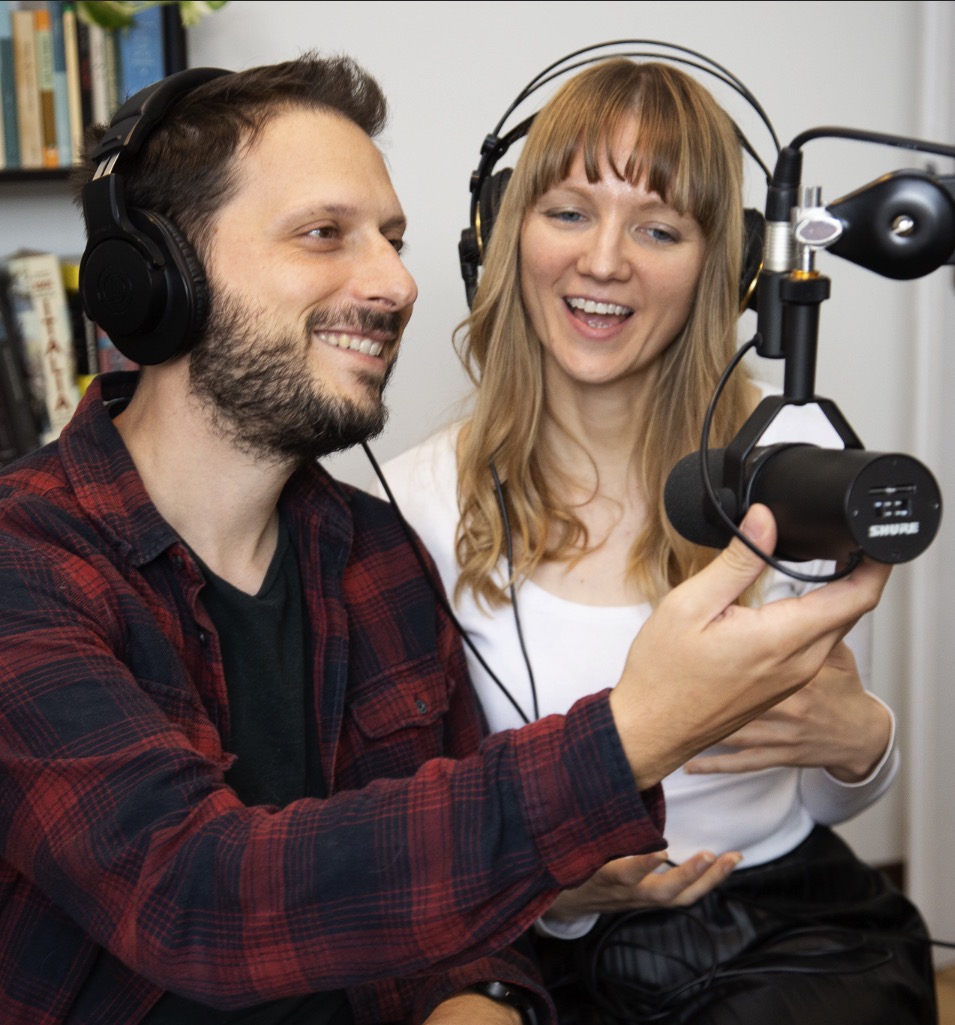
La famiglia , or family, is a big part of Italian culture. So talking about family is a great way to connect with Italians.
And if you have Italian roots, you might enjoy telling Italians about them and how they led you to learn Italian.
In this post, you’ll see lots of different words for family members, but don’t feel you have to memorize them all. Just pick the ones that you’re more likely to use in conversation.
You’ll also learn tips on how to speak about family in the most natural Italian way. Like how you should use “my” when talking about family members and why you shouldn’t say parenti for “parents”.
Immediate Family Members in Italian
You can use these words to talk about the people in your family who are most closely related to you.
| Padre | Father | PAH-dreh |
| Madre | Mother | MAH-dreh |
| Papà | Dad | Pah-PAH |
| Mamma | Mum | MAHM-mah |
| Genitori | Parents | Jeh-nee-TOH-ree |
| Fratello | Brother | Frah-TEL-loh |
| Sorella | Sister | So-REL-lah |
| Figlio | Son | FEE-lyoh |
| Figlia | Daughter | FEE-lyah |
| Figli | Children (daughters and sons), sons | FEE-lyi |
| Figlie | Daughters | FEE-lyeh |
| Marito | Husband | Ma-REE-toh |
| Moglie | Wife | MOH-lyeh |
| Compagno | Partner (male) | Com-PAH-nyoh |
| Compagna | Partner (female) | Com-PAH-nyah |
For example:
Mio marito è di Firenze -My husband is from Florence
I miei figli vivono a Roma -My children live in Rome
Mia figlia studia architettura -My daughter studies architecture
Extended Family Members in Italian
To talk about your extended family, here are the words you’ll need.
| Nonno | Grandfather | NON-noh |
| Nonna | Grandmother | NON-nah |
| Bisnonno | Great grandfather | Bees-NON-noh |
| Bisnonna | Great grandmother | Bees-NON-nah |
| Trisnonno | Great-great-grandfather | Trees-NON-noh |
| Trisnonna | Great-great-grandmother | Trees-NON-nah |
| Zio | Uncle | TSEE-oh |
| Zia | Aunt | TSEE-ah |
| Prozio | Great uncle | PROH-tsee-oh |
| Prozia | Great aunt | PROH-tsee-ah |
| Cugino | Cousin (male) | Koo-JEE-noh |
| Cugina | Cousin (female) | Koo-JEE-nah |
| Cugini | Cousins (male, mixed group) | Koo-JEE-nee |
| Cugine | Cousins (female) | Koo-JEE-neh |
| Nipote* | Nephew / Niece / Grandson / Granddaughter | Nee-POH-teh |
| Nipoti | Nieces / Nephews / Nieces and Nephews / Grandchildren | Nee-POH-tee |
* Nipote can mean niece, nephew, or grandchild in Italian. Context will let you know which one someone’s talking about.
For example:
Mio nonno era di Napoli -My grandfather was from Naples
Parlo italiano con i miei cugini -I speak Italian with my cousins
Mi piace passare il tempo con i miei nipoti -I like to spend time with my grandchildren
In-Laws in Italian
In Italian, you don’t just add the word “in-law” to the end of the family member like we do in English. Instead, there’s a word for each type of “in-law”.
| Suocero | Father-in-law | SWOH-cheh-roh |
| Suocera | Mother-in-law | SWOH-cheh-rah |
| Suoceri | Parents-in-law | SWOH-cheh-ree |
| Genero | Son-in-Law | GEH-neh-roh |
| Nuora | Daughter-in-law | NWOH-rah |
| Cognato | Brother-in-law | Koh-NYAH-toh |
| Cognata | Sister-in-law | Koh-NYAH-tah |
For example:
Mio genero è italiano -My son-in-law is Italian
Viaggio in Italia con mio figlio e mia nuora -I’m travelling in Italy with my son and my daughter-in-law
Vedo mia cognata ogni weekend -I see my sister-in-law every weekend
Stepfamily in Italian
Here are the words you can use to talk about your stepfamily in Italian.
It’s not wrong to use these words, but Italians don’t use them as often as in other languages. That’s because words for stepfamily members can sometimes sound a bit negative, like something out of a fairytale. It almost sounds like saying the “evil stepmother” or “wicked stepsister”.
So unless you’re Cenerentola (Cinderella), Italians tend to explain the relationships instead. For example, instead of matrigna (stepmother), they might say la moglie di mio padre (my father’s wife, lit. “the wife of my father”).
| Patrigno | Stepfather | Pah-TREE-nyoh |
| Matrigna | Stepmother | Mah-TREE-nyah |
| Figliastro | Stepson | Fee-LYAH-stroh |
| Figliastra | Stepdaughter | Fee-LYAH-strah |
| Fratellastro | Stepbrother | Frah-teh-LAH-stroh |
| Sorellastra | Stepsister | Soh-reh-LAH-strah |
For example:
Il mio figliastro vive con noi -My stepson lives with us
Il mio fratellastro è un tifoso dell'Inter -My stepbrother is a fan of Inter.
Useful Phrases to Talk about Family in Italian
Since family is important in Italy, asking Italians about their family is a great way to show you’re friendly and connect with them. Italians might also ask you about your family as well.
Here are some useful phrases to talk about family in Italian.
| Sono figlio unico | I'm an only child (male) | SOH-noh FEE-lyoh OO-nee-koh |
| Sono figlia unica | I'm an only child (female) | SOH-noh FEE-lyah OO-nee-kah |
| Hai fratelli o sorelle? | Do you have any brothers or sisters? | AH-ee frah-TELL-lee oh soh-RELL-leh? |
| I miei figli vivono vicino | My children live nearby | Ee MEE-eh-ee FEE-lyee VEE-voh-noh vee-CHEE-noh |
| I miei figli vivono lontano | My children live faraway | Ee MEE-eh-ee FEE-lyee VEE-voh-noh lohn-TAH-noh |
| Quanti fratelli hai? | How many siblings/brothers do you have? | KWANT-tee frah-TELL-lee AH-ee? |
| Quante sorelle hai? | How many sisters do you have? | KWANT-tee soh-RELL-leh AH-ee? |
| Dove vive la tua famiglia? | Where does your family live? | DOH-veh VEE-veh lah TOO-ah fah-MEE-lyah? |
| Ho una famiglia numerosa | I have a big family | OH OO-nah fah-MEE-lyah noo-meh-ROH-zah |
| Siamo in cinque | There are five of us (lit. we are in five) | SYAH-moh een CHEEN-kweh |
| Non ho figli | I don't have children | Nohn OH FEE-lyee |
| Come si chiama tua figlia / tuo figlio? | What's your daughter / son called? | CO-meh see KYAH-mah TOO-ah FEE-lyah / TOO-oh FEE-lyoh? |
| Quanti anni ha? | How old is he/she? | KWANT-tee AHN-nee AH? |
| Vado d'accordo con (mio fratello) | I get along well with (my brother) | VAH-doh dah-KOR-doh kohn (MEE-oh frah-TELL-loh) |
| Siamo una famiglia unita | We’re a close family | SYAH-moh OO-nah fah-MEE-lyah oo-NEE-tah |
| Quanto spesso vi vedete? | How often do you see each other? | KWANT-oh SPEH-ssoh vee veh-DEH-teh? |
| Ci vediamo una volta al mese | We see each other once a month | Chee veh-DYAH-moh OO-nah VOL-tah ahl MEH-zeh |
| Salutami … | Say hi to… / Give my regards to… | Sah-loo-TAH-mee |
| Come sta la tua famiglia? | How is your (informal) family? | KOH-meh stah lah TOO-ah fah-MEE-lyah? |
| Come sta la sua famiglia? | How is your (formal) family? | KOH-meh stah lah SOO-ah fah-MEE-lyah? |
| A casa tutti bene? | Is everyone at home well? (lit. at home everyone well?) | Ah KAH-sah TOO-tee BEH-neh? |
| Come stanno i tuoi*? | How are your (informal) parents? | CO-meh STAHN-noh ee TWOH-ee? |
| I tuoi stanno bene? | Are your (informal) parents well? | Ee TWOH-ee STAHN-noh BEH-neh? |
| La mia famiglia sta bene, grazie. E la tua? | My family is doing great, thanks. And yours (informal)? | Lah MEE-ah fah-MEE-lyah stah BEH-neh, GRAH-tsee-eh. Eh lah TOO-ah? |
| La mia famiglia sta bene, grazie. E la sua? | My family is doing great, thanks. And yours? (formal) | Lah MEE-ah fah-MEE-lyah stah BEH-neh, GRAH-tsee-eh. Eh lah SOO-ah? |
*In Italian, you can shorten i miei genitori (“my parents”) or i tuoi genitori (“your parents,” informal) to just i miei (literally “mine”) or i tuoi (literally “yours”) in informal situations.
For example:
Salutami tua zia! -Say hi to your aunt for me
Vado molto d’accordo con mia sorella -I get along very well with my sister
Ho una famiglia numerosa. Siamo in sette. -I have a big family. There are seven of us.
How to Use “My” When Talking About Family in Italian
Usually, in Italian, to say “my”, we literally say “the my”.
For example:
Il mio biglietto -My ticket (lit. the my ticket)
La mia valigia -My suitcase (lit. the my suitcase)
But when you talk about one family member, you don’t usually use il or la before mio or mia.
For example:
✅ Mio fratello -My brother
✅ Mia sorella -My sister
And not:
❌ Il mio fratello -My brother (lit. the my brother)
❌ La mia sorella -My sister (lit. the my sister)
However, we do add the word for “the” if the word is plural.
For example:
I miei fratelli -My brothers / siblings
I miei genitori -My parents
I miei nonni -My grandparents
We also add “the” if we add extra details to the family member, like altering the word or adding details.
For example:
La mia sorellina -My little sister
Il mio fratellastro -My stepbrother
Il mio fratello maggiore -My older brother
You can read more about how this works in our article on Italian possessive adjectives , which is just the fancy grammar term for words like “my” and “your” in Italian.
Family in Italian: 26 Words To Talk About Your Famiglia: Review
-
Immediate Family
You can use these words for your closest family members.
For example:
Mio marito è di Firenze -My husband is from Florence.
Mia figlia studia architettura -My daughter studies architecture.
-
Extended Family
Words for grandparents, aunts, uncles and cousins.
For example:
Mio nonno era di Napoli -My grandfather was from Naples.
Parlo italiano con i miei cugini -I speak Italian with my cousins.
-
In-Laws
Each in-law has its own word in Italian.
For example:
Mio genero è italiano . -My son-in-law is Italian.
Vedo mia cognata ogni weekend -I see my sister-in-law every weekend.
-
Stepfamily
You can use words like patrigno (stepfather) and matrigna (stepmother), but Italians often describe the relationship instead, for example by saying la moglie di mio padre (my father’s wife).
For example:
Il mio figliastro vive con noi -My stepson lives with us.
-
Useful Phrases
Common ways to talk about your family or ask about someone else’s.
For example:
Come stanno i tuoi? -How are your parents?
Siamo una famiglia unita -We’re a close family.
-
Using “My” for Family
We usually don’t use “the” before mio/mia when talking about one family member.
For example:
✅ mio fratello -my brother
❌ il mio fratello -my brother (lit. the my brother)
But we use “the” in front of “my” for plurals or if we modify the word.
For example:
i miei genitori (my parents)
la mia sorellina (my little sister)
K: Ciao a tutti e benvenuti! Hi everyone and welcome to “Learn Italian with Joy of Languages”.
M: In today’s episode, you’ll learn some words to talk about your family members, including your immediate and your extended family.
K: You’ll also learn a couple of rules that will help you talk about family in a natural, Italian way.
But before we get started, can we ask you a quick favore ? If you’re listening to this on your podcast app, could you click the subscribe or follow button? This way you’ll get notified when we release a new episode and you’ll help our podcast grow so we can keep making free lessons like this. Grazie!
M: You’re going to hear a conversation between me and Katie talking about our plans for Christmas Eve, la Vigilia di Natale (x2) , this year. See if you can hear the different family members we mention.
K: Matteo, per la vigilia di Natale facciamo come sempre?
M: Sì, andiamo a casa di mia zia.
K: Ok!
M: Mia mamma prepara l’insalata russa, mia zia i peperoni al forno e mia cugina gli spaghetti alle vongole.
K: E io...
M: E tu, mio zio e i miei nipoti mangiate. Come sempre.
K: Perfetto!
K: I asked Matteo:
M: Matteo, per la vigilia di Natale facciamo come sempre? - For Christmas Eve, are we doing what we always do? Literally:
Per - for
La - the
Vigilia - Eve
Di - of
Natale - Christmas
Facciamo - we do
Come - as
Sempre - always
K: Then Matteo replied:
M: Sì, andiamo a casa di mia zia - yes, we’re going to my aunt’s house. Literally:
Sì - yes
Andiamo - we go
A - to
Casa - house
Di - of
Mia - my
Zia - aunt
K: You’ve just heard the first family member.
M: Zia. Aunt . Zia.
K: Matteo added this word mia in front to say “my”. Mia is the word we use to say “my” when we’re talking about female family members.
M: Mia zia (x2)
Then I added:
K: Ok!
You can use ok in Italian like you can in English, but to make the pronunciation sound really Italian, you want to make “oh” sound a bit shorter, so not “ohhh”, but “oh”, and the “ay” sound on the end longer.
M: Ok
K: Then Matteo explained what each family member is preparing:
M: Mia mamma prepara l’insalata russa - My mum is preparing Russian salad. Literally:
Mia - my
Mamma - mum
Prepara - prepares
L’insalata - the salad
Russa - Russian
K: Insalata russa , or Russian salad, is a dish that Italians often eat around Christmas or New Year. You make it with potatoes, mayonnaise, eggs and some vegetables like carrots, peas and gherkins, or pickles as they’re known in the US.
M: You also heard another family member that you might recognise: mamma. Mum. Mamma. And like we saw with zia , to say “my mum”, we say mia mamma. We say mia because mamma is a female family member.
M: Mia mamma (x2)
K: Matteo also explained what his aunt and cousin are preparing:
M: mia zia i peperoni al forno - my aunt (is preparing) the roasted peppers. The “is preparing” part is implied, so we get “my aunt the roasted peppers”. Literally:
Mia - my
Zia - aunt
I - the
Peperoni - peppers
Al - to the
Forno - oven
K: And then Matteo said:
M: e mia cugina gli spaghetti alle vongole - and my cousin the spaghetti with clams. Literally:
Mia - my
Cugina - cousin
Gli - the
Spaghetti - spaghetti
Alle - to the
Vongole - clams
K: According to Catholic traditions, you’re technically meant to eat fish and not meat on Christmas Eve, which is partly why it’s common to eat spaghetti alle vongole on the 24th, especially in Naples, where Matteo is from.
M: You also heard another family member: Cugina . Cousin. Cugina.
K: In English, we just say cousin whether it’s a male or female cousin, but in Italian, there are two separate words.
M: A female cousin is cugina , with an -a on the end. And a male cousin is cugino, with an -o on the end.
K: I wasn’t sure how I’d be contributing to the dinner, so I started to ask:
M: e io … - and I…Literally:
E - and
Io - I
K: And Matteo answered with:
M: E tu, mio zio e i miei nipoti mangiate. Come sempre. - And you, my uncle and my nieces and nephews eat. As always. Literally:
E - and
Tu - you
Mio - my
Zio - uncle
E - and
I - the
Miei - my
Nipoti - Nephews
Mangiate - eat
Come - as
Sempre - always
K: Matteo said a couple of other family members. He said uncle, which in Italian is:
M: Zio (x2) . It’s like the word for aunt, zia , but this time it has an -o on the end, like most masculine words in Italian.
K: And since it’s a masculine word, to say “my” we don’t say mia, but mio, with an -o on the end as well.
M: Mio zio (x2)
K: Matteo also mentioned the word for nieces and nephews:
M: Nipoti (x2)
K: This word is quite unusual in Italian because it can mean both grandchildren and nieces and nephews.
M: For example, if you wanted to say “my grandchildren speak Italian”, you would say i miei nipoti parlano italiano. And if you meant “my nieces and nephews speak Italian,” you’d say exactly the same thing: i miei nipoti parlano italiano .
K: It probably seems confusing that there’s just one word for lots of family members. But context lets you know which one someone’s talking about. And it also just means there’s just one word for you to learn.
M: To say “my nieces and nephews”, I also said i miei nipoti. Literally “the my nephews”.
M: I miei nipoti (x2)
K: This is the standard Italian rule. We add the word “the” in front of “my”, so my computer would be il mio computer, literally “the my computer”. Or “my pizza”, a feminine word, would be la mia pizza.
When we’re talking about a group of family members, in the plural, we follow this rule. For example, with nipoti, (grandchildren or nieces and nephews), we say “i” for the. The my grandchildren:
M: I miei nipoti
K: It’s the same with “cousins”, cugini. Because it’s a plural, we literally say: the my cousins
M: I miei cugini
K: There is an exception, and that is with singular family members, as you’ve heard in most of this episode.
M: That’s why we said mia zia and mia cugina. Just my aunt and my cousin, with no “the” in the front. So not la mia zia , just mia zia. And not la mia cugina. Just mia cugina.
K: So to recap, for singular family members, there is no “the”. My cousin:
M: Mia cugina for a female and mio cugino for a male.
K: But for plurals, we do say “the”: My cousins, literally “the my cousins”:
M: I miei cugini.
K: If it feels confusing that there are these special rules for family members, that’s normal!
M: If you make a mistake, don’t worry, because as long as you get the main word right, for example cugino, for cousin and cugini for cousins, you’ll still be understood.
K: Going back to the conversation, I didn’t think I could handle the pressure of cooking for a long table of Neapolitans, I prefer to leave it to the experts. So that’s why I was happy about Matteo’s suggestion that all I have to do is just eat with his uncle, nieces and nephews. So I replied:
M: Perfetto - perfect.
K: Let’s hear the whole conversation again: K: Matteo, per la vigilia di Natale facciamo come sempre?
M: Sì, andiamo a casa di mia zia.
K: Ok!
M: Mia mamma prepara l’insalata russa, mia zia i peperoni al forno e mia cugina gli spaghetti alle vongole.
K: E io...
M: E tu, mio zio e i miei nipoti mangiate. Come sempre.
K: Perfetto!
M: You’ve heard a few different family members, but of course there are loads more, including ones that are very useful, but that you’re not always taught at first in Italian, like daughter-in-law and son-in-law. You’ll find the words for these family members all in one place on our blogpost.
K: There, you’ll also find lots of useful phrases to ask Italians about their family to be friendly, or phrases you might want to use to talk about your own family, like “my great grandfather was from Italy” or “my children live close by”.
M: To find out more, just click the link in the description to head over to our website, or go to italian.joyoflanguages.com/podcast and search for episode 209.
M: See you next time.
K: Or as we say in Italian.
Alla prossima!
Time to check your understanding and remember everything you just learned! Below you’ll find a mini-quiz and some vocabulary cards to help it all go in.
Quiz: Family in Italian
How much did you learn? Find out in the quiz!
Click here to take the quiz for this episode: Family in Italian
Vocabulary
Mia zia = My aunt
Mio zio = My uncle
Mia mamma = My mum
I miei nipoti = My nieces and nephews
Mia cugina = My cousin (female)
Mio marito è di Firenze = My husband is from Florence
I miei figli vivono a Roma = My children live in Rome
Mia figlia studia architettura = My daughter studies architecture
Mio genero è italiano = My son-in-law is Italian
Vedo mia cognata ogni weekend = I see my sister-in-law every weekend
Salutami tua zia! = Say hi to your aunt for me
Vado molto d’accordo con mia sorella = I get along very well with my sister
Flashcards: Family in Italian
Not sure how it works? Click here to watch the tutorial