When you first start learning Italian, you often focus on polite basics like buongiorno and grazie.
But although these phrases are useful, they keep the conversation very polite and surface level.
In this post, you’ll learn the kind of common Italian phrases that you can use to show Italians that you’re warm and friendly, so you can connect with them.
They’re not complicated phrases, but simple responses and reactions that Italians use all the time.
Perfetto
Pronunciation: Per-FEHT-toh
You can use perfetto a lot like “perfect” in English to show that something is ideal or just right.
For example:
Cagliari è il posto perfetto per una vacanza al mare. -Cagliari is the perfect place for a seaside holiday.
But you can also use perfetto in friendly conversations with Italians to show a positive reaction to something, or to show that something (like a plan) works well for you.
For example:
- Ci vediamo alle otto domani? -Shall we meet up (lit. see each other) at eight tomorrow?
-Perfetto! -Perfect!
Or:
-Prenoto un tavolo per stasera? . -Shall I book a table for this evening?
-Perfetto, grazie! -Perfect, thank you!
Mi piace / non mi piace
Pronunciation: Mee PYA-cheh / Non mee PYA-cheh
If you want to have more than just a surface level chat with Italians, sharing personal details can really help, like telling them what you like (or mi piace in Italian) or don’t like ( non mi piace ).
You can also use the phrase mi piace to compliment Italians or just sound generally positive.
For example:
Mi piace la tua giacca. -I like your jacket.
Non mi piace il vino rosso, ma mi piace il vino bianco. -I don’t like red wine, but I like white wine.
Mi piace questa città, è molto bella. -I like this city, it’s very beautiful.
💡 Good to know: Mi piace and non mi piace might seem basic in Italian, but their phrasing is actually a bit tricky because you’re technically saying “it is (not) pleasing to me”. If you’re not sure how to use them you can listen to our podcast episode how to use piace in Italian .
Come va?
Pronunciation: KOH-meh vah
You might know come stai (“how are you?”, informal) in Italian, but another very natural expression to use is come va?
It literally means “how’s it going?”.
You can also use it to ask how something is going in Italian if you use the phrase come va con… (lit. “How’s it going with…).
For example:
Ciao Mary, come va? -Hi Mary, how’s it going?
Come va con il corso di italiano? -How’s the Italian course going?
Piacere
Pronunciation: Pya-CHEH-reh
Piacere is a useful word to know when you’re meeting an Italian for the first time. It means “nice to meet you”, but instead of needing four words for it like in English, you can just use one.
It’s also really handy because you can use it in formal and informal situations.
For example:
Piacere! Sono Katie. -Nice to meet you! I’m Katie.
And:
-Questa è la mia amica Mary. -This is my friend Mary.
-Piacere! -Nice to meet you!
If you’d like to read a little bit more about using piacere , you can read our blogpost on how to say nice to meet you in Italian .
Ottima idea
Pronunciation: OT-tee-ma ee-DEH-ah
Ottima idea (“great idea”) is a phrase that helps you connect with Italians because it allows you to compliment them for having a good idea, or to show enthusiasm for a suggestion that they’ve had.
For example:
- Prendo del vino per stasera? -Shall I get some wine for this evening?
-Sì, ottima idea! -Yes, great idea!
Or:
Andiamo al cinema questo pomeriggio? - Shall we go to the cinema this evening?
-Perfetto! Ottima idea! -Perfect! Great idea!
Nessun problema
Pronunciation: Neh-SOON proh-BLEH-mah
If you want to emphasize that something isn’t a big deal, you can say nessun problema (no problem) in Italian.
Nessun problema is useful because it shows you’re relaxed about what’s happened and lets the other person know they don’t need to worry.
Here’s how you might hear it or use it in Italy:
-Scusi per l’attesa. -Sorry for the wait.
-Nessun problema. -No problem.
Or:
-Sono in ritardo di dieci minuti. -I’m running ten minutes late.
-Nessun problema. -No problem.
And:
-Mi dispiace, ma non abbiamo più tavoli liberi per stasera. -I’m sorry, but we don’t have any more tables available for this evening.
-Nessun problema. Ritorno domani. -No problem. I’ll come back tomorrow.
Grazie per l’aiuto
Pronunciation: GRATs-yeah per lah-YOO-toh
If someone has helped you in Italy, you could just say grazie (“thank you”), but you can make it sound even more genuine and personal by telling them grazie per l’aiuto “thanks for the help”) to emphasize what you’re thanking them for.
For example:
Grazie per l’aiuto con i bagagli. -Thanks for the help with the luggage.
Grazie per l’aiuto con la prenotazione. -Thanks for the help with the booking.
Complimenti
Pronunciation: Kom-plee-MEN-tee
If you want to show you’re impressed by something an Italian has shared with you, you can say complimenti!
Complimenti is a way to say “well done” or “congratulations” in Italian. It can also mean “compliments”, similar to English.
For example:
Questo risotto è buonissimo. Complimenti allo chef. -This risotto is delicious. Compliments to the chef.
Complimenti per la nuova casa. È bellissima! -Congratulations on the new house. It’s beautiful.
La tua pronuncia in italiano è fantastica. Complimenti! -Your pronunciation in Italian is amazing. Well done!
You can see how it works in a few more examples on our blogpost most common ways to say congratulations in Italian .
Che buon profumo
Pronunciation: Keh BWOHN proh-FOO-moh
Che buon profumo literally means “what a good smell”. There are lots of everyday situations where you can use it in Italy.
For example, you might say it when your food arrives at a restaurant and smells delicious, or when you walk into an Italian’s house and like the smell of what they’re cooking for lunch.
For example:
Che buon profumo! Cosa stai preparando? -It smells great! What are you making?
Che buon profumo questo risotto. -This risotto smells amazing.
Che bella serata
Pronunciation: Keh BEHL-lah seh-RAH-tah
You can say che bella serata (“what a beautiful evening”) in Italian to make small talk and sound positive.
Che bella serata can mean “what a beautiful evening” in the sense that the weather is nice, or you can use it to say that you’ve had or are having a nice time.
For example:
Che bella serata! Vuoi cenare sulla terrazza? -What a beautiful evening! Do you want to have dinner on the terrace?
Che bella serata ieri! Grazie per l’invito. -What a lovely evening yesterday! Thanks for the invite.
Un attimo
Pronunciation: Oon AHT-tee-moh
If you need a bit more time to do something in Italian, you can say un attimo (one moment). Saying un momento also works for “one moment”, but un attimo is a phrase that Italians use all the time.
Here’s how you might hear it or use it:
- Katie, sei pronta? -Katie, are you ready?
-Sì, un attimo solo. Devo finire una cosa. -Yes, just one moment. I have to finish something.
Or:
-Usciamo?
-Sì, un attimo. Devo prendere la giacca. -Yes, one moment. I have to get my jacket.
Volentieri
Pronunciation: Voh-lehn-TYEH-ree
If your Italian friend asks you if you want to join them for dinner, you might say: volentieri!
Or if your Italian cousin asks you if you want some more gelato, you reply: volentieri, grazie! as well.
Volentieri is a way of saying you’re glad or willing to do something. You could translate it as “I’d love to” or “that sounds great” in English, but in Italian it’s even easier because there’s just one word that you need.
Here’s how it works in a few other examples:
Vuoi venire al mare con noi? -Do you want to come to the seaside with us?
Sì, volentieri! -Yes, I’d love to!
Or:
Vuoi del vino? -Would you like some wine?
Volentieri, grazie! -I’d love some, thank you!
Davvero?
Pronunciation: Dahv-VEH-roh
Davvero is a word you can use in Italian to show you’re interested or surprised by something that an Italian has said.
It’s like saying “really” or “no way” in English.
For example:
-La prima domenica del mese i musei sono gratis in Italia. -On the first Sunday of the month, museums are free in Italy.
-Davvero? -Really?
Or:
-Questa estate andiamo a Roma. -This summer we’re going to Rome.
-Davvero? Wow! -Really? Wow!
Scherzo
Pronunciation: SKER-tsoh
If you want to show Italians that you have a sense of humor, and say something in a jokey or lighthearted way with family and friends, scherzo is a good word to know.
It comes from the verb scherzare (“to joke”) and it means “I’m joking” or “just kidding”.
For example:
Sveglia alle cinque domani, giusto? Scherzo! -Alarm clock for five tomorrow, right? Just kidding!
La carbonara con la panna è molto buona!*...Scherzo! -Carbonara with cream is really tasty!...Just kidding!
*Making carbonara with cream technically breaks Italian food rules. We talk about it in our podcast on dire: how to use this really common Italian verb .
15 Common Italian Phrases That Help You Connect with the Locals: Review
Here’s a list of the common phrases that help you connect with the locals, all in one place.
Reacting to plans → perfetto, ottima idea, volentieri
Showing interest → davvero?
Being polite → nessun problema, grazie per l’aiuto
Sharing opinions → mi piace / non mi piace
Making small talk → come va?, che bella serata
Complimenting → complimenti, che buon profumo
Introductions → piacere
Showing your sense of humor → scherzo
Buying a bit of time → un attimo
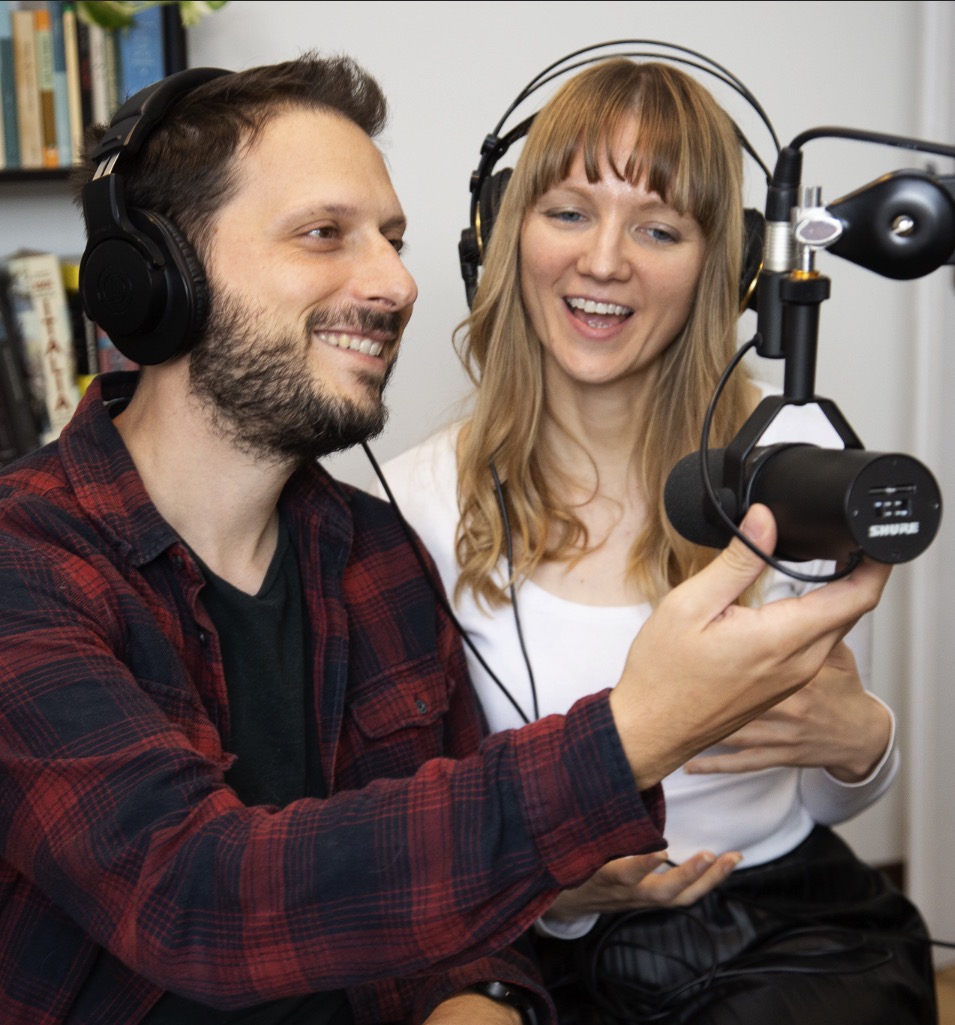
K: Ciao a tutti e benvenuti! Hi everyone and welcome to “Learn Italian with Joy of Languages”.
M: In today’s episode, you’ll learn some everyday phrases that you can use to show Italians that you’re not just there to do all the tourist things, but you’re also friendly and want to get to know Italians.
K: And these aren’t complicated things that you might pick up after years of learning Italian. They’re simple phrases that you can learn even if you’ve just started.
M: To see if you can already guess the meaning of these phrases, we’re going to do a quiz. But before we get started, if you’re listening to this on your podcast app could you do us un favore and hit the subscribe or follow button? This way you’ll get notified when we release a new episode and you’ll help our podcast grow so that we can keep making free lessons like this. Grazie!
K: Ok, quiz time. We’ll give you some typical situations you might find yourself in in Italy and you have to guess which phrase you’d need to use.
First question: you're in Naples and you want to get the train to explore some places along the Amalfi coast. You were a bit confused about which trains to get, but the signora at the ticket office has been really helpful in explaining what you need to do. What could you say to thank her?
M:
A) Grazie lo stesso
B) Grazie in anticipo
C) Grazie per l'aiuto
K: The correct answer is…
M: C, grazie per l’aiuto. It literally means:
Grazie - thank you
Per - for
L’aiuto - the help
Grazie per l’aiuto.
K: You could just say “thank you” in Italian if someone has done something nice, so grazie, but saying grazie per l’aiuto, thanks for the help, sounds a lot more friendly and natural. It adds that extra detail and shows exactly what you’re grateful for, which makes it feel warmer and more personal.
M: And in Italian, any time you want to thank someone for something, you can say grazie per. “Thank you for”. So you can use the start of this phrase to say other things too. Like grazie per le indicazioni. Thanks for the directions. Grazie per le indicazioni.
K: Next question. You’re in a restaurant and wanted to order tiramisù for dessert, but the waiter tells you he’s really sorry, they’ve run out. How could you react to show the waiter it’s not a problem?
M:
A) No problema
B) Nessun problema
C) Neanche problema
K: The correct answer is…
M: B, nessun problema. This means “no problem” in Italian. Lots of Italian learners think that they should translate “no problem” literally and say no problema , but the correct Italian way to say it is nessun problema (x2).
K: Nessun is a tricky word. It literally means “not one” or “not a single one”. So you’re kind of saying “there’s not any single problem” when you use this phrase.
M: Nessun problema is really useful because you can use it in informal and formal situations. So you could use it with someone you don’t know well, like a receptionist or waiter, or if your friend tells you they’re running late for dinner, you could say nessun problema as well.
K: Next question. You’re chatting to an Italian and they tell you that there’s a fountain in Rome where they sometimes have vino , wine flowing instead of water. You find this really interesting and surprising, so what phrase could you use to react to what they’ve said?
M:
A) Davvero?
B) Sicuro?
C) In che senso?
K: The correct answer is…
M: A, davvero?
K: Davvero? is like saying “really?” in English. It’s really handy if you want to show you’re interested or surprised by something an Italian has said.
M: Because you’re saying davvero as a question, you should make your voice go up at the end: Davvero?
K: And by having this intonation, instead of a flat tone, this also helps to show your interest and surprise. For the pronunciation, there are two “v’s” in the word davvero, so this makes a long v sound.
M: Dav·vero (x2)
By the way, this wine serving fountain in Rome actually exists. It’s called Fontana dei 4 Mori and when there’s the grape festival in October, it serves white wine.
K: Time for the fourth question. Your Italian cousins are organising a dinner party and they ask if you’d like to come. You’re grateful for the invite and you want to tell them you’d love to be there. What word could you use to say this?
M:
A) Dipende
B) Sì
C) Volentieri
K: The correct answer is…
M: C, volentieri (x2)
K: Volentieri is like saying “happily” or “gladly” in English. If it helps you to remember it, you can think of it as a similar to the word “volontarily”. In other words, it’s something that you are willing to do because you’d like to, not because you have to.
M: If someone asks you if you want to come to a dinner party, you could just say option B, sì, or yes, but that doesn’t sound as friendly or enthusiastic as volentieri.
K: This is one of those tricky words with lots of vowels, so let’s break it down: voh-len-tye-ri. The tye in the middle takes a bit of getting used to. It’s spelt t-i-e, but it sounds like t-y-e. Tye (x2)
M: Vo-len-tie-ri (x2). Volentieri.
K: Italians use volentieri all the time to show they’re up for doing something. So if you’re asked if you want to go to the beach in the afternoon, go out for an aperitivo or see an exhibition at the museum, anything you like the sound of, you can say volentieri . It’s a way of showing you like the sound of a plan and you appreciate being included.
M: Where in English, you might need a whole phrase, like “that would be lovely” or “I’d love to”, in Italian we can just say one word: volentieri .
K: Last question. You want to joke around with Italians and show your sense of humour. So let’s imagine it’s raining and cold (it can get rainy and cold sometimes in Italy!), you say andiamo in spiaggia ? Shall we go to the beach? Andiamo in spiaggia ? You want to say you’re just kidding at the end. What could you say?
M:
A) Scherzo
B) Sono divertente
C) Non è vero
K: The correct answer is…
M: A , scherzo (x2)
K: Scherzo means “I joke” or “I’m joking”. It comes from the verb, scherzare, which means to joke.M: Italians use scherzo in everyday conversations. If you say something slightly absurd or unexpected, adding scherzo straight away makes it light and friendly.
K: Now that you’ve heard a few everyday phrases to connect with Italians, let’s see what you can remember.
How could you go beyond a simple “thank you” and tell an Italian “thanks for the help?”.
[...]
M: Grazie per l’aiuto (x2)
K: And how would you say “no problem”, like if a waiter tells you they’re out of something, or a friend messaged to say they were running a bit late?
[...]
M: Nessun problema (x2)
K: How would you say “really?” in Italian to show you’re interested and surprised by something an Italian has said.
[...]
M: Davvero? (x2)
K: What’s one word you can use to enthusiastically accept an invitation, like if your cousins invite you over? It sounds a bit like "voluntarily" and it has a little tye in the middle.
[...]
M: Volentieri (x2)
K: And lastly, you’re trying to not sound so serious in Italian. What could you say for “just kidding” after you’ve made a joke?
[...]
M: Scherzo (x2)
K: So you’ve heard a few friendly phrases in Italian, but what about other useful phrases to connect with Italians, for example, if you want to compliment someone’s cooking, or show them you’re impressed by something they’ve done.
M: You can find those phrases, plus the ones you learnt today so you can go back and review them, on our website. Just click the link in the description, or you can go to italian.joyoflanguages.com/podcast and search for episode 222.
M: See you next time.
K: Or as we say in Italian.
Alla prossima!
Time to check your understanding and remember everything you just learned! Below you’ll find a mini-quiz and some vocabulary cards to help it all go in.
Quiz: 15 Common Italian Phrases That Help You Connect with the Locals
How much did you learn? Find out in the quiz!
Vocabulary
Che bella serata! Vuoi cenare sulla terrazza? = What a lovely evening! Do you want to have dinner on the terrace?
Che buon profumo! Cosa stai preparando? = It smells great! What are you preparing?
Complimenti per la nuova casa. È bellissima! = Congratulations on the new house. It’s beautiful!
Ciao Mary, come va? = Hi Mary, how’s it going?
Piacere! Sono Katie = Nice to meet you! I’m Katie
Un attimo solo = Just one moment.
Volentieri, grazie = I’d love to, thanks
Nessun problema = No problem
Grazie per l’aiuto = Thanks for the help
Davvero? = Really?
Volentieri = I’d love to
Scherzo = Just kidding
Flashcards: 15 Common Italian Phrases That Help You Connect with the Locals
Not sure how it works? Click here to watch the tutorial