If you’re in Italy, an aperitivo is a great way to relax, catch up with friends, and have some tasty nibbles and typical Italian drinks.
You might have heard of it, but it can be hard to know exactly what it is or how it works in Italy.
In this post, you’ll learn what an aperitivo is and some useful Italian phrases you can use and hear when ordering one.
What is an aperitivo?
If you have an aperitivo in Italy, it means having a drink and usually a few nibbles in the early evening, before dinner.
It’s a great way to catch up with friends over good food and drink, maybe sitting in a piazza if the weather’s nice.
How does an aperitivo work in Italy?
Here are some tips on how you can have an aperitivo the Italian way:
-
You usually have an aperitivo some time around 6-7:30 pm. Italians often have more clearly defined mealtimes, so you wouldn’t have an aperitivo at 3 pm for example ( you’d have only just finished lunch😉).
-
Italians don’t usually have drinks on an empty stomach, which is partly why you have snacks with your drink for an aperitivo.
-
In most cases, nibbles are included in the price of the drink, but you can ask for more snacks and pay extra.
-
Pre-Covid, you could have a buffet for an aperitivo and help yourself to as many snacks as you wanted. Now, usually the waiter brings the food out to you.
-
With an aperitivo , the snacks are often decided by the bar, so you don't normally choose or order them. The waiter just brings out whatever snacks are included. But you can always ask if there are extra snacks available to order from a menu.
-
If you decide to eat more food for your aperitivo , it can become more like a dinner. Italians have a name for this: apericena . It’s a mixture of the words aperitivo and cena (dinner).
-
You don’t necessarily have to go to a bar for an aperitivo. You might have an aperitivo at someone’s house. And Italian weddings often have a big aperitivo with lots of food and drinks before everyone sits down for the main meal.
-
Not every bar in Italy offers an aperitivo . To be sure that you’re going to one that does, you can look out for a couple of clues. If you see lots of outdoor tables, or groups of Italians sitting together with cocktails before dinner time, then it’s likely that it’s a good spot for an aperitivo. Pubs and restaurants are less likely to offer an aperitivo.
-
You can have an aperitivo inside or outside. If the weather’s nice, you can have one in the piazza . If it’s colder weather, you can find Italians having an aperitivo under heated lamps.
💡Good to know : If you talk about a bar in Italian, it's not exactly the same thing as in English. Italians also use the word bar for a place where you might have breakfast, a coffee, a quick snack, or an aperitivo . In some ways, an Italian bar is kind of a mix between a café and a bar in English, which is why there isn't a perfect translation.
What drinks come with an aperitivo?
There are lots of different drinks you can have for an aperitivo , but they tend to be light and refreshing because the idea is to have something before dinner that isn’t too strong or heavy.
Alcoholic drinks
| Drink | Pronunciation | What's in it? |
| Aperol Spritz | AH-peh-rolsprits | Aperol, prosecco, sparkling water |
| Campari Spritz | Kahm-PAH-ree sprits | Campari, prosecco, sparkling water |
| Select Spritz | SEH-lekt sprits | Select, prosecco, sparkling water |
| Hugo Spritz | OO-go sprits | Prosecco, elderflower syrup, sparkling water, mint |
| Negroni | Neh-GRO-nee | Gin, Campari, sweet red vermouth |
| Negroni Sbagliato | Neh-GRO-nee zbahl-YAH-toh | Campari, sweet vermouth, prosecco |
| Americano | Ah-meh-ree-KAH-no | Campari, sweet vermouth, sparkling water |
| Gin Tonic | Jeen TOH-neek | Gin and tonic water |
| Moscow Mule | MOS-kohv MYOOL-eh | Vodka, ginger beer, lime |
| Mojito | Moh-HEE-toh | Rum, mint, lime, sugar, sparkling water |
| Prosecco | Proh-SEK-koh | Italian sparkling wine |
| Vino bianco | VEE-no bee-AHN-koh | White wine |
| Vino rosso | VEE-no ROSS-oh | Red wine |
Non-Alcoholic Aperitivo Drinks
| Italian | Pronunciation | What is it? |
| Crodino | Croh-DEE-noh | A popular non-alcoholic aperitivo with a slightly bitter taste |
| Sanbittèr | San-beet-TER | A bitter, alcohol-free aperitivo, often bright red |
| Ginger Beer | JIN-jer BEE-er | Non-alcoholic ginger-flavoured drink |
| Cocktail analcolico alla frutta | Cock-TAIL ah-nal-KOH-lee-koh AL-lah FROOT-tah | A fruit-based mocktail |
| Succo di frutta | SOOK-koh dee FROOT-tah | Fruit juice |
| Chinotto | Kee-NOT-toh | A bitter Italian soft drink made from citrus fruit |
| Cedrata | Cheh-DRAH-tah | A sweet citrus soft drink, often served chilled |
💡Good to know: If you don't drink alcohol, you can ask for a cocktail analcolico (non-alcoholic cocktail). In many bars, there isn't a long list of mocktails to choose from. Instead, the bar will have its own non-alcoholic drink that they make for you. If there is a choice, they might ask you if you prefer dolce (sweet) or amaro (bitter).
What food comes with an aperitivo?
The exact food you get depends on the bar and the region of Italy you're in, but here are some of the snacks and small dishes you're most likely to see with an aperitivo .
| Arachidi/Noccioline | Peanuts | Ah-RAH-kee-dee/ Not-cho-LEE-neh |
| Bruschetta | Toasted bread with toppings | Broo-SKET-tah |
| Focaccia | Focaccia bread | Foh-KAH-chah |
| Olive | Olives | Oh-LEE-veh |
| Patatine | Crisps / Chips | Pah-tah-TEE-neh |
| Pizzette | Mini pizzas | Peet-TSET-teh |
| Salatini | Savoury pastries | Sah-lah-TEE-nee |
| Salumi | Cured meats | Sah-LOO-mee |
| Tagliere di salumi e formaggi | Board of cured meats and cheeses | Tahl-YEH-reh dee sah-LOO-mee eh for-MAHJ-jee |
| Taralli | Taralli crackers | Tah-RAHL-lee |
| Tramezzini | Small sandwich triangles | Trah-meh-ZEE-nee |
When you’re asking for snacks for an aperitivo, it’s useful to know the word for “some” in Italian. For example, you might want to ask for “some olives” ” ( delle olive ) or “some peanuts” ( delle noccioline ). You can read about how this works in our lesson on how to say some in Italian .
The phrases you need for an aperitivo in Italy
| Volete fare l'aperitivo? | Would you (plural) like to have (lit. do) an aperitivo? | Voh-LEH-teh FAH-reh lah-peh-ree-TEE-voh |
| Siete pronti (per ordinare?) | Are you (plural) ready (to order)? | See-EH-teh PRON-tee pehr or-dee-NAH-reh |
| Avete deciso? | Have you decided? | Ah-VEH-teh deh-CHEE-zoh? |
| Vi porto il menu? | Shall I bring you (plural) the menu? | Vee POR-toh eel meh-NOO |
| Posso avere il menu? | Can I have the menu? | POS-soh ah-VEH-reh eel meh-NOO |
| Vorrei uno spritz, per favore. | I'd like a spritz, please. | Vor-RAY OO-noh sprits, pehr fah-VOH-reh |
| Prendo un Negroni. | I'll have (lit. take) a Negroni. | PREN-doh oon Neh-GRO-nee |
| Per me un Campari Spritz. | A Campari Spritz for me. | Pehr meh oon Kahm-PAH-ree sprits |
| Un cocktail analcolico, per favore. | A non-alcoholic cocktail, please. | Oon cock-TAIL ah-nal-KOH-lee-koh, pehr fah-VOH-reh |
| Preferisci qualcosa di dolce o di amaro? | Would you prefer something sweet or bitter? | Preh-feh-REE-shee qual-KOH-zah dee DOL-cheh oh dee ah-MAH-roh |
| Con ghiaccio, per favore. | With ice, please. | Kohn GHYAHC-choh, pehr fah-VOH-reh |
| Senza ghiaccio, per favore. | Without ice, please. | SEN-tsah GHYAHC-choh, pehr fah-VOH-reh |
| Posso avere una cannuccia per favore? | Can I have a straw, please. | Kohn OO-nah kah-NOO-chah, pehr fah-VOH-reh |
| Porto qualcosa da stuzzicare? | Shall I bring something to nibble on? | POR-toh qual-KOH-zah dah stoot-tsee-KAH-reh |
| Porto degli stuzzichini? | Shall I bring some snacks? | POR-toh deh-lyee stoot-tsee-KEE-nee |
| Posso avere degli stuzzichini? | Can I have some snacks? | POS-soh ah-VEH-reh deh-lyee stoot-tsee-KEE-nee |
| Sono inclusi nell'aperitivo? | Are they included with the aperitivo? | SOH-noh een-KLOO-zee nell-ah-peh-ree-TEE-voh |
| Vi porto un tagliere? | Shall I bring you a sharing board? | Vee POR-toh oon tahl-YEH-reh |
| Sono vegetariano / vegetariana. | I'm vegetarian. | SOH-noh veh-jeh-tah-ree-AH-noh / veh-jeh-tah-ree-AH-nah |
| Sono vegano / vegana. | I'm vegan. | SOH-noh veh-GAH-noh / veh-GAH-nah |
| Un piatto vegetariano, per favore. | A vegetarian platter, please. | Oon PYAHT-toh veh-jeh-tah-ree-AH-noh, pehr fah-VOH-reh |
| Porto qualcos'altro? | Shall I bring anything else? | POR-toh qual-koh-ZAHL-troh |
💡Good to know: If you’re eating out with someone else in Italy, the waiter will use the plural you to talk to you and other people on your table. If you want to know more about how this works, you can read our lesson on you in Italian: formal vs. informal explained .
Aperitivo in Italy: The Phrases You Need and How It Works: Review
Now you know how an aperitivo works in Italy and some of the phrases you can use when ordering one.
Here's a quick recap:
-
An aperitivo is a drink and a few snacks before dinner.
-
Italians usually have an aperitivo between about 6 and 7:30 pm.
-
Snacks are often included with your drink.
-
Common aperitivo drinks include spritzes, prosecco, wine, and non-alcoholic options like a Crodino .
-
Usually you don’t choose the snacks, they’re just brought out to you, but you can often order extra food if you'd like.
-
Useful phrases include vorrei (I'd like), per me (for me), and posso avere...? (can I have...?).
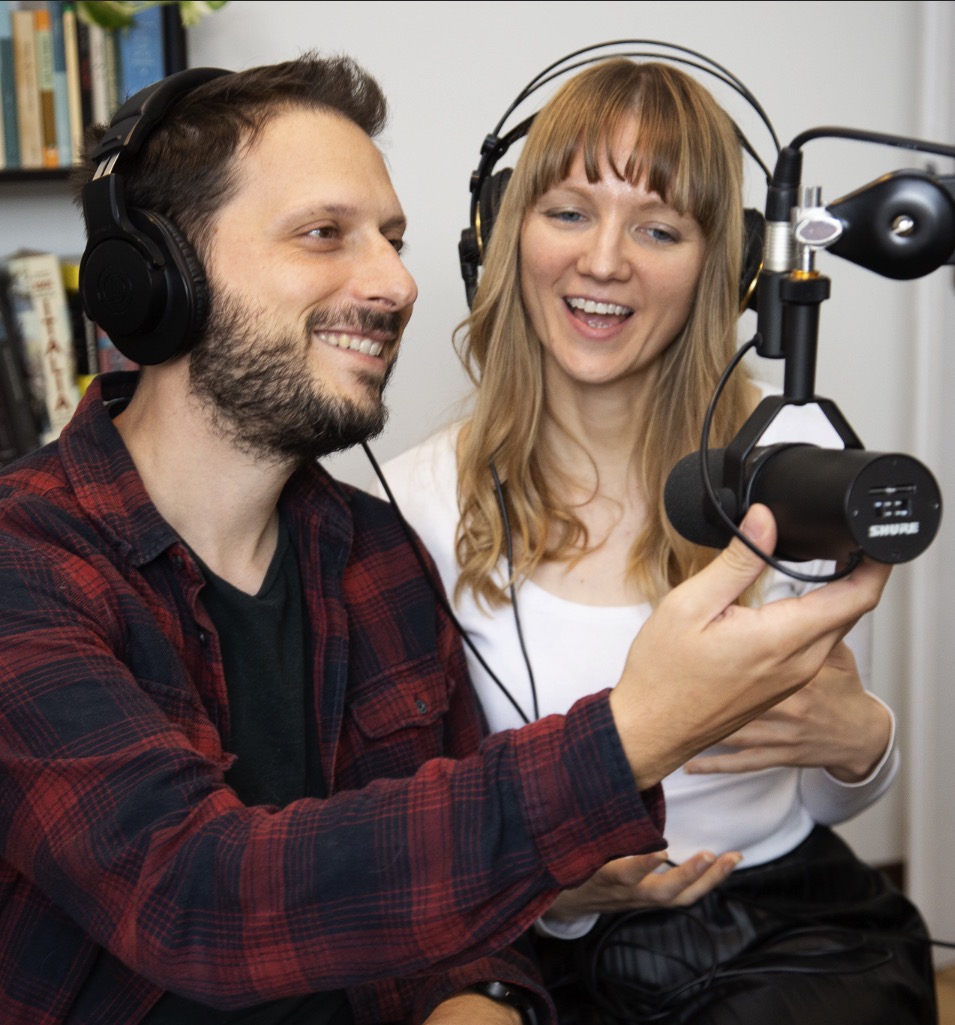
K: Ciao a tutti e benvenuti! Hi everyone and welcome to Learn Italian with Joy of Languages.
You might have lots of questions about an aperitivo. Like what kind of food or drinks can I expect, do I order from a menu, is the aperitivo in place of dinner?
M: In this episode, we’ll do our best to answer those sorts of questions and tell you what you need to know about having an aperitivo in Italy.
K: But before we get started, can we ask you a quick favore ? If you’re listening to this on your podcast app, could you click the subscribe or follow button? This way you’ll get notified when we release a new episode and you’ll help our podcast grow so we can keep making free lessons like this. Grazie !
You’re now going to hear a conversation between me, Katie and a pretend waitress, who’s actually one of the teachers at our school, Annaluna.
A: Siete pronti? Cosa vi porto?
K: Per me uno spritz.
A: Campari o Aperol?
K: Campari, grazie.
M: Un crodino per favore.
A: Perfetto, vi porto anche degli stuzzichini? Pizza, focaccia…?
K: Volentieri
M: Ma andiamo a cena dopo!
K: E quindi?
K: Annaluna started by saying:
M: Siete pronti? - Are you (plural) ready? Literally:
Siete - you (plural) are
Pronti - ready
K: In Italian, they have a “you” plural, which they use any time they’re talking to two or more people. In this case it’s: siete, you plural are. If you’re eating out or having an aperitivo with one person or more, the waiter will use the plural “you” in Italian to talk to your group.
M: Another example is avete . You have, in the plural. Avete.
You could also hear the waiter say avete deciso? Have you (plural) decided? Avete deciso?
K: Then the waitress asked:
M: Cosa vi porto? - What can I get you? Literally:
Cosa - what
Vi - to you (plural)
Porto - I bring
K: It might sound a bit strange to hear in Italian “to you I bring” instead of “I bring to you”, but that’s just how Italians say it! But you don’t have to worry about the grammar rule for now, you can just learn this common phrase as it is.
M: Cosa vi porto?
K: And then I answered:
M: Per me uno spritz - for me a spritz. Literally:
Per - for
Me - me
Uno - a
Spritz - spritz
K: You’ve just heard a useful phrase that you can use when you’re ordering in Italy:
M: Per me. For me. Per me. You just add the thing you want to order on the end, like per me uno spritz. For me a spritz. Or per me un prosecco . For me a prosecco.
K: You might wonder why we say un prosecco, but uno spritz with an o, uno. The reason is that when masculine words start with sp, s plus consonant, sp, we add an o to avoid having too many consonants in a row. Italian loves vowels, so saying unsp, like in unspritz, doesn’t sound right. So we add a vowel and we say uno spritz. It’s a funny little rule you don’t need to worry about too much for now, you can just learn the phrase: uno spritz.
M: Then the waitress wanted to check which spritz Katie wanted, so she asked:
M: Campari o Aperol?
K: It’s really common to have a spritz for an aperitivo in Italy. There are a few different types, but some of the more popular spritzes are the Aperol spritz and the Campari spritz. Aperol and Campari are both the names for the type of alcohol used. Aperol is slightly bitter, but also has a sweetness to it. Campari is much more bitter. And Campari is a lot stronger, it has about double the alcohol content. When you have an Aperol or Campari spritz, they’re often mixed with prosecco, sometimes with a bit of sparkling water too, and ice.
M: If you’re wondering where to go for an aperitivo in Italy, a good clue is to look for places where people are sitting outside drinking spritzes. An Aperol Spritz is a bright orange colour and a Campari Spritz is a deep red, so you can usually spot them easily.
K: I ordered the strongest one:
M: Campari, grazie - Campari, thank you.
K: Just a note that in Italian, you can say grazie where in English we might be more likely to say please. So it would be correct in Italian to say Campari, per favore , or Campari, please, but it would also be very common to say Campari, grazie, or Campari, thank you.
Then Matteo gave his order:
M: Un crodino per favore - a Crodino please, which is a type of drink. Literally:
Un - a
Crodino - Crodino
Per favore - please
K: Crodino is something you can ask for if you want an alcohol free option. It’s a type of bitter orange drink that tastes a bit like an Aperol spritz, just without the alcohol.
M: Or you can also order things like fruit juice, or non-alcoholic cocktails.
K: Then the waitress asked:
M: Perfetto, vi porto anche degli stuzzichini? - Perfect, shall I also bring some snacks? Literally: Perfetto - perfect
Vi - to you
Porto - I bring
Anche - also
Degli - some
Stuzzichini - snacks
K: So again here we say “to you I bring” in Italian.
M: Stuzzichini is a useful word to talk about the kind of food you get at an aperitivo, or any time you have snacky food, like at a birthday party.
K: If the waiter uses the word stuzzichini , they’re talking about more substantial snacks, instead of nibbles like peanuts. For example, the waitress said she could bring:
M: Pizza, focaccia… - Pizza, focaccia
K: Usually if you order a drink in Italy for an aperitivo , you get some nibbles for free. Partly because in Italy, Italians usually don’t like to drink on an empty stomach.
M: The free nibbles tend to be things like patatine, potato chips, olive, olives, arachidi, peanuts, or taralli , which are a bit like a cracker. And you don’t usually choose the nibbles, they’re just brought out to you.
M: Or sometimes the waiter or waitress might ask you if you want some snacks. Usually, the waiter just brings out whatever snacks are included with the drink, but you can always ask if there are extra snacks available to order from the menu.
When the waitress asked if we wanted snacks, or stuzzichini, I answered:
M: Volentieri (x2)
K: Volentieri is a word that Italians use a lot and there’s not an exact English word for it, but it roughly means “that would be great” or “yes I’d love to”. You can remember it because it resembles the word "voluntarily", just pay attention to the syllables because they are a bit different in Italian:
M: VOH-LEN-TYEH-REE (x2) Volentieri.
K: And then Matteo said:
M: Ma andiamo a cena dopo - But we’re going for dinner later. Literally:
Ma - but
Andiamo - we go
A - to
Cena - dinner
Dopo - after
K: So you have an aperitivo before dinner time, some time around 6 to 7:30. And you usually just have a few small snacks, so you’d still have dinner afterwards.
M: But sometimes, Italians choose to order a bit more food for an aperitivo and it becomes their dinner. And this has a special name in Italy which is an apericena. It’s a mixture of the words aperitivo and cena, or dinner. Some Italians find this word a bit cringe, because it’s a new word.
K: But I have a huge appetite and often eat more than Matteo, so I was happy to order a bit of extra food and have dinner. So when Matteo said “but we’re going for dinner later”, I said:
M: E quindi? So? Literally:
E - and
Quindi - so
K: Now you’ve heard a few phrases that you can use, or that you might hear a waiter or waitress use, during an aperitivo in Italy. Let’s see what you can remember.
What might you hear when you first arrive at the table? It’s the Italian for “Are you ready?”
[...]
M: Siete pronti (x2)
K: And what’s the Italian for “what can I get you”? This one’s a bit trickier, it literally means “what to you I bring”.
[...]
M: Cosa vi porto? (x2)
K: And what about the really useful phrase for ordering which means “for me”? For example you could say “for me a spritz”?
[...]
M: Per me. For example, per me uno spritz (x2) .
K: And can you remember how to say “some nibbles”? For example, you might hear a waiter say “can I also bring you some nibbles?”
[...]
M: Some nibbles is degli stuzzichini (x2). And you might hear a waiter say vi porto anche degli stuzzichini?
K: And what’s a typical Italian word that you can say for “that would be great?” It starts in the same way as voluntarily.
[...]
M: Volentieri
K: Let’s hear the whole conversation again.
C: Siete pronti? Cosa vi porto?
K: Per me uno spritz.
C: Campari o Aperol?
K: Campari, grazie.
M: Un crodino per favore
C: Perfetto, vi porto anche degli stuzzichini? Pizza, focaccia…?
K: Volentieri
M: Ma andiamo a cena dopo!
K: E quindi?
K: You’ve heard a few words and phrases for ordering an aperitivo in Italy, but there are a few extra details that we haven’t mentioned, like the other types of food and drink you can have, or how to spot if a place actually doesn’t serve aperitivo options. You can find these kinds of tips on our website.
M: There, you’ll also find more phrases to do with ordering an aperitivo in Italy, so you can be prepared for other things the waiter might say to you, or have the phrases you need to get your order right.
K: Just click the link in the description to head over to our website, or go to italian.joyoflanguages.com/podcast and search for episode 237.
K: See you next time.
M: Or as you now know we say in Italian:
Alla prossima!
Time to check your understanding and remember everything you just learned! Below you’ll find a mini-quiz and some vocabulary cards to help it all go in.
Quiz: Aperitivo in Italy
How much did you learn? Find out in the quiz!
Click here to take the quiz for this episode: Aperitivo in Italy
Vocabulary
Posso avere il menù? = Can I have the menu?
Prendo un Negroni = I’ll have (lit. take) a Negroni
Un cocktail analcolico, per favore = A non-alcoholic cocktail
Preferisci qualcosa di dolce o di amaro? = Do you prefer something sweet or bitter?
Sono inclusi nell'aperitivo? = Are they included in the aperitivo?
Siete pronti? = Are you (plural) ready?
Avete deciso = Have you (plural) decided?
Cosa vi porto? = What can I get you?
Per me uno spritz = For me a spritz
Vi porto anche degli stuzzichini? = Can I also get you (plural) some snacks?
Flashcards: Aperitiv o in Italy
Not sure how it works? Click here to watch the tutorial