When you’re in Italy, you might be flying in from home or travelling to another city. Either way, airports already come with enough to think about, so it helps if you don’t have to worry about finding the right Italian phrases too.
It’s true that many signs and announcements at the airport are in English, but knowing a few Italian phrases can still be helpful. They give you a better sense of what’s being said around you and make it easier to ask for help without relying too much on English.
In this blogpost, you’ll learn the most important words and phrases in Italian for l’aeroporto (the airport).
The Words You Need for the Airport in Italy
These are some of the Italian words that you’re likely to come across when travelling through the airport in Italy. You might spot them on signs and hear them used by airport staff.
Partenze - Departures
| Aeroporto | Airport | Ah-eh-roh-POR-toh |
| Partenze | Departures | Par-TEN-tseh |
| Entrata | Entrance | En-TRAH-tah |
| Uscita | Exit | Oo-SHEE-tah |
| Piano | Floor / Level | PYAH-noh |
| Ascensore | Elevator | Ah-shen-SOH-reh |
| Scale mobili | Escalators | SKAH-leh MOH-bee-lee |
| Tabellone | Board | Tah-behl-LOH-neh |
| Volo cancellato | Cancelled flight | VOH-loh kan-chehl-LAH-toh |
| Volo diretto | Direct flight | VOH-loh dee-RET-toh |
| Documento | ID / Document | Doh-koo-MEN-toh |
| Visto | Visa | VEES-toh |
| Carta d’imbarco | Boarding pass | KAR-tah deem-BAR-koh |
| Check-in* | Check-in | Chek-EEN |
| Bilancia | Scale | Bee-LAN-chah |
| Controlli di sicurezza | Security checks | Kon-TROL-lee dee seh-koo-REH-tsah |
| Vaschetta | Tray | Vah-SKEHT-tah |
| Gate | Gate | GAYT-uh |
| Fare la fila | To stand in line | FAH-reh lah FEE-lah |
| Imbarco | Boarding | Eem-BAR-koh |
For example:
Le partenze sono al primo piano. -The departures are on the first floor.
Il tabellone dice che il gate è aperto. -The board says that the gate is open.
Scusi, dove sono i controlli di sicurezza? -Excuse me, where are the security checks?
*There are a few English words that you can use at the airport in Italian. Just keep in mind that even though they’re English words, Italians say them with an Italian pronunciation. So to do things the Italian way you can pronounce them that way too.
Sull'Aereo - On the Plane
| Aereo | Airplane | Ah-EH-reh-oh |
| Pilota | Pilot | Pee-LOH-tah |
| Hostess | Flight attendant | OH-stess |
| Steward | Flight attendant | STOO-ard |
| Passeggero | Passenger | Pahs-sehj-JEH-roh |
| Posto | Seat | POS-toh |
| Corridoio | Aisle | Kor-ree-DOY-oh |
| Finestrino | Window | Fee-neh-STREE-noh |
| Cintura di sicurezza | Seatbelt | Chin-TOO-rah dee seh-koo-REH-tsah |
| Cappelliera | Overhead bin | Kah-pehl-LYEH-rah |
| Bagagli | Luggage | Bah-GAHL-yee |
| Bagaglio a mano | Carry-on suitcase | Bah-GAHL-yoh ah MAH-noh |
| Stiva | Hold | STEE-vah |
| Decollo | Takeoff | Deh-KOHL-loh |
| Atterraggio | Landing | Ah-tehr-RAHJ-joh |
For example:
Ho solo un bagaglio a mano. -I just have a carry-on suitcase.
I bagagli devono andare in stiva. -The luggage has to go into the hold.
Arrivi - Arrivals
| Arrivi | Arrivals | Ar-REE-vee |
| Coincidenza | Connection | Koh-een-chee-DEN-tsah |
| Scalo | Layover | SKAH-loh |
| Ritiro bagagli | Baggage claim | Ree-TEE-roh bah-GAHL-yee |
| Dogana | Customs | Doh-GAH-nah |
| Noleggio auto | Car rental | Noh-LEDJ-joh OW-toh |
| Navetta | Shuttle | Nah-VEHT-tah |
For example:
Devo fare uno scalo a Milano. -I have to do a layover in Milan.
C’è una navetta per andare al terminal 3? -Is there a shuttle to go to Terminal 3?
Useful Phrases for the Airport in Italy
Here are some useful Italian phrases for getting around the airport and dealing with common travel situations. They help you do things like ask for directions or understand important information, like if your flight is delayed.
At the Airport - In aeroporto
| Dov’è l’uscita? | Where is the exit? | Doh-VEH loo-SHEE-tah |
| Come arrivo al Terminal 2? | How do I get to Terminal 2? | KOH-meh ah-REE-voh ahl TER-mee-nahl DOO-eh |
| Dov’è la stazione dei treni? | Where is the train station? | Doh-VEH lah stah-TSYOH-neh day TREH-nee |
| Dove compro il biglietto del treno? | Where do I buy the train ticket? | DOH-veh KOM-proh eel bee-LYET-toh del TREH-noh |
| Dove compro il biglietto dell'autobus? | Where do I buy the bus ticket? | DOH-veh KOM-proh eel bee-LYET-toh del-LOW-toh-boos |
| C’è un autobus per il centro? | Is there a bus to the center? | ChEH oon OW-toh-boos per eel CHEN-troh |
| Dove posso prendere un taxi? | Where can I get a taxi? | DOH-veh POS-soh PREHN-deh-reh oon TAK-see |
| Il mio bagaglio non è arrivato | My luggage hasn't arrived | Eel MEE-oh bah-GAHL-yoh non eh ah-ree-VAH-toh |
| I bagagli arrivano sul nastro 3 | Luggage arrives on belt 3 | Ee bah-GAHL-yee ah-REE-vah-noh sool NAS-troh treh |
For example:
Dove posso prendere un taxi per andare in centro? -Where can I get a taxi to go to the center?
Information About Your Flight - Informazioni sul tuo volo
| Dov’è il check-in per… | Where is the check-in for… | Doh-VEH eel chek-EEN per |
| Devo cambiare terminal? | Do I need to change terminals? | DEH-voh kahm-BYAH-reh TER-mee-nahl |
| Quanto dista il Gate 3? | How far is Gate 3? | KWAN-toh DEES-tah eel gayt treh |
| Questo è il gate per Roma? | Is this the gate for Rome? | KWES-toh eh eel gayt per ROH-mah |
| È questa la fila per…? | Is this the line for…? | Eh KWES-tah lah FEE-lah per… |
| Il volo è in orario / ritardo? | Is the flight on time / late? | Eel VOH-loh eh een oh-RAH-ree-oh / ree-TAR-doh |
| Il gate apre alle… | The gate opens at… | Eel gayt AH-preh AHL-leh… |
| Il gate è aperto | The gate is open | Eel gayt eh ah-PAIR-toh |
| Il volo per Roma sta imbarcando | The flight to Rome is boarding | Eel VOH-loh per ROH-mah stah eem-bar-KAN-doh |
| Ha bagagli da imbarcare? | Do you have bags to check-in? | Ah bah-GAHL-yee dah eem-bar-KAH-reh |
| Posso vedere il suo passaporto? | Can I see your passport? | POS-soh veh-DEH-reh eel SOO-woh pahs-sah-POR-toh |
| Posso vedere la carta d’imbarco? | Can I see your boarding pass? | POS-soh veh-DEH-reh lah KAR-tah deem-BAR-koh |
For example:
Il volo in partenza per Napoli è in ritardo. -The flight for Naples is delayed.
Il volo per Roma sta imbarcando dal gate 3. -The flight for Rome is boarding from gate 3.
When you’re going through the airport, it’s a good idea to know how to say numbers in Italian (so you can talk about things like your gate or flight number). Here’s how to say numbers 1-100 in Italian.
On the Plane - Sull'aereo
| Un posto vicino al finestrino | A window seat | oon POS-toh vee-CHEE-noh ahl fee-neh-STREE-noh |
| Un posto vicino al corridoio | An aisle seat | oon POS-toh vee-CHEE-noh ahl kor-ree-DOY-oh |
| Il mio posto è 5C | My seat is 5C | Eel MEE-oh POS-toh eh CHEEN-kweh chee |
| Posso cambiare il mio posto? | Can I change my seat? | POS-soh kahm-BYAH-reh eel MEE-oh POS-toh |
| Scusi, forse questo è il mio posto | Excuse me, I think this is my seat | SKOO-zee FOR-seh KWES-toh eh eel MEE-oh POS-toh |
| Permesso* | Excuse me (passing through) | Per-MES-soh |
| Vuole una mano con i bagagli? | Do you want a hand with the bags? | VWOH-leh OO-nah MAH-noh kon ee bah-GAHL-yee |
| Questa borsa è sua? | Is this bag yours? | KWES-tah BOR-sah eh SOO-wah |
| Allacciare la cintura di sicurezza | To fasten the seatbelt | Ahl-lah-CHAH-reh lah chin-TOO-rah dee seh-koo-REH-tsah |
For example:
Idealmente, vorrei un posto vicino al corridoio. -Ideally, I’d like an aisle seat.
Permesso. Devo mettere la mia valigia nella cappelliera. - Excuse me. I have to put my suitcase in the overhead bin.
*In Italian, there are a few different ways to say excuse me. You use permesso when you want to get past someone. You can read more about how this works on our blogpost how to say excuse me in Italian .
How to Say the Main Italian Cities in Italian
Italian cities sometimes have different names from English, so you might hear or see them called by their Italian name at airport. Here’s a list of the Italian names for the major cities with airports in Italy.
| Bari | Bari | BAH-ree |
| Bergamo | Bergamo | BEHR-gah-moh |
| Bologna | Bologna | Boh-LOH-nyah |
| Cagliari | Cagliari | KAH-lyah-ree |
| Catania | Catania | Kah-TAH-nyah |
| Firenze | Florence | Fee-REN-tseh |
| Genova | Genoa | JEH-no-vah |
| Milano | Milan | Mee-LAH-noh |
| Napoli | Naples | NAH-poh-lee |
| Palermo | Palermo | Pah-LEHR-moh |
| Pisa | Pisa | PEE-zah |
| Roma | Rome | ROH-mah |
| Torino | Turin | Toh-REE-noh |
| Venezia | Venice | Veh-NET-tsyah |
| Verona | Verona | Veh-ROH-nah |
Airport in Italian: Phrases You Need When Flying in Italy: Review
-
Knowing words like navetta (shuttle), controlli di sicurezza (security checks) and partenze (departures), help you understand the information around in at the airport and give you the words you need to ask for information if you need it.
For example:
C’è una navetta per andare al terminal 3? -Is there a shuttle to go to Terminal 3?
Scusi, dove sono i controlli di sicurezza? -Excuse me, where are the security checks?
-
It’s useful to know a few phrases in Italian to get around and ask for help.
For example:
Dove posso prendere un taxi per andare in centro? -Where can I get a taxi to go to the center?
Il volo in partenza per Napoli è in ritardo -The flight for Naples is delayed
-
Cities sometimes have different names in Italian.
For example:
Firenze -Florence
Milano -Milan
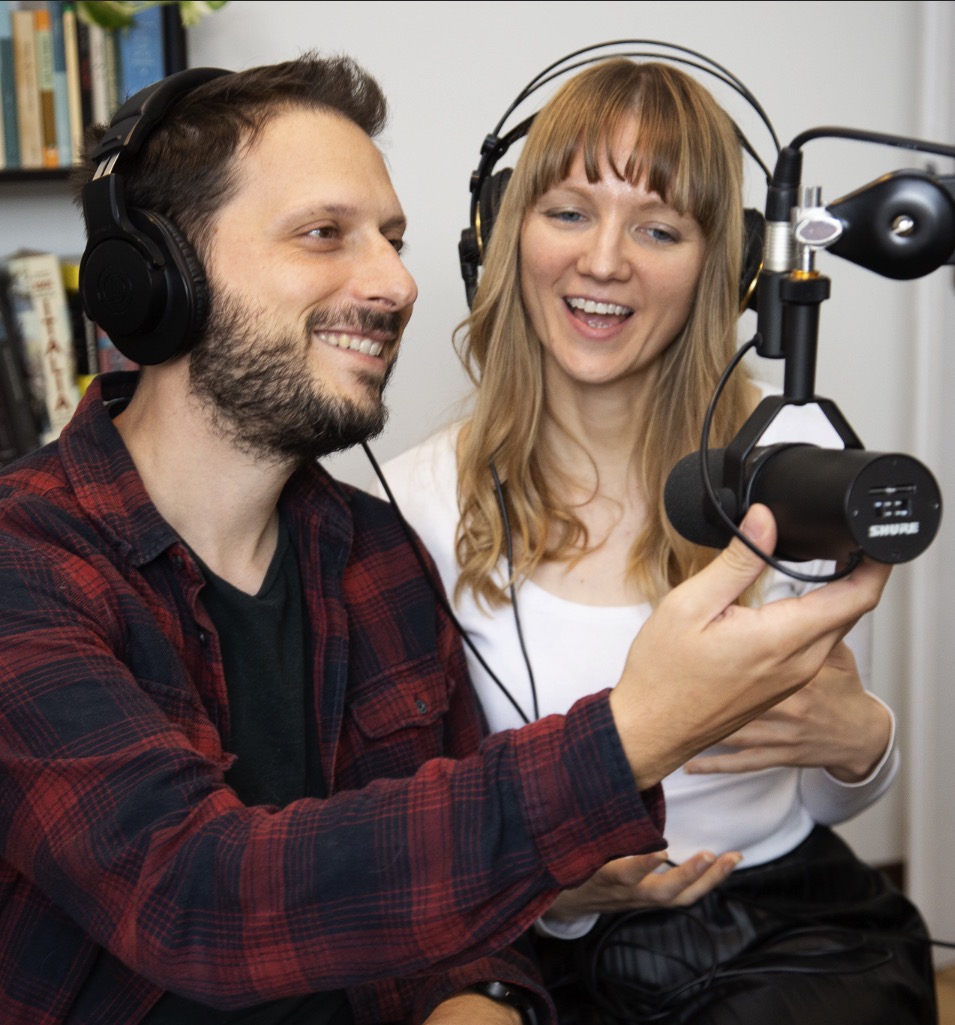
K: Ciao a tutti e benvenuti! Hi everyone and welcome to “Learn Italian with Joy of Languages”.
M: In this episode, you’ll learn the everyday Italian phrases for getting around the airport and how to pronounce them, so you can say them the Italian way.
K: You’ll also hear about some common mistakes to avoid. But before we get started, can we ask you a quick favore ? If you’re listening to this on your podcast app, could you click the subscribe or follow button? This way you’ll get notified when we release a new episode and you’ll help our podcast grow so we can keep making free lessons like this. Grazie!
M: You’re going to hear a conversation between me and Katie where we’re talking about boarding our flight. See if you can hear the different airport related words.
M: Il gate per il nostro volo è aperto.
K: Ah...
M: Andiamo? C'è la fila
K: Perché fare la fila? I posti sono già assegnati.
M: Sì, ma se saliamo sull'aereo per ultimi non c'è posto per i bagagli.
K: Ok… mangiamo i panini e andiamo?
M: Ok, ma se poi non c'è spazio la mia valigia viaggia nel tuo posto e tu viaggi in stiva!
K: Matteo started by saying:
M: Il gate per il nostro volo è aperto - the gate for our flight is open. Literally:
Il - the
Gate - gate
Per - for
Il - the
Nostro - our
Volo - flight
È - is
Aperto - open
K: The good news is that when you’re talking about a gate at the airport, the word is the same in English and Italian, so that means there’s no new word for you to use. Just keep in mind that Italians will say it with an Italian pronunciation.
M: Gate (x2)
K: If you change the intonation and make your voice kind of go up at the end, you could use this same phrase to ask a question. So to ask is the gate to our flight open, it would be:
M: Il gate per il nostro volo è aperto? Is the gate for our flight open? Il gate per il nostro volo è aperto?
K: Since I didn’t seem to be in any hurry to move after Matteo told me the gate was open, he said:
M: Andiamo? C'è la fila - Shall we go? There’s a line, or queue, as we say in the UK. Literally:
Andiamo? - we go?
C’è - there is
La - the
Fila - line, or queue
K: Fila , line or queue, is a useful word to know when you’re travelling around Italy because you might see one in lots of places, like outside a monument or museum. Once you know the word for it you can start to use it in phrases like “is this the queue?”
M: And by the way, in Italian, that would be: è questa la fila? Literally:
È - is
Questa - this
La - the
Fila - queue
È questa la fila?
K: You also heard another useful word volo , or flight. So when you see or hear information about your flight in Italy, like flight delayed, or flight on time, this word will come up.
M: When we talk about things that belong to us, like our flight, in Italian we usually put “the” in front, so our flight is literally “the our flight”: il nostro volo (x2) .
K: Then I said:
M: Perché fare la fila? - Why stand in line, or the queue? Literally:
Perché - why
Fare - do
La - the
Fila - queue
K: You’ve already heard the word for a line, or queue, fila . In Italian, “to stand in line” is fare la fila. Literally, “to do the line.”
M: Fare la fila (x2)
K: I really hate queuing at the airport, so I tend to wait until the last minute before getting on the plane. And the reason I do this is because:
M: I posti sono già assegnati - the seats are already assigned. Literally:
I - the
Posti - seats
Sono - are
Già - already
Assegnati - assigned
M: In Italian, when we talk about a seat, like a seat you’d get on an aeroplane or other type of transport, we use the word posto .
K: Un posto, with an -o on the end is Italian for “a seat”. If we talk about seats plural, it becomes posti. With an -i on the end, pronounced -ee. Posti.
M: Lots of learners make the mistake of saying sedia to say seat, whereas actually sedia means “chair”, like one you might sit on at the dinner table. Instead for seat, we say il posto (x2).
K: Then Matteo replied:
M: Sì, ma se saliamo sull'aereo per ultimi - yes, but if we’re the last ones to get on the plane… Literally:
Sì - yes
Ma - But
Se - if
Saliamo - we go up
Sull’ - on the
Aereo - plane
Per - for
Ultimi - last
K: Salire can mean to go up, like go upstairs, or to get onto something. It makes sense in a way because when you get onto transport you’re literally going up onto it. So you can also use salire to talk about getting onto a train or bus.
M: In this case, I talked about getting on the plane, salire sull’aereo. So the word in Italian for plane is aereo.
K: The pronunciation of this word is tricky for lots of learners. Apart from one letter, the word is all vowels. And in Italian, we should say each vowel separately and not smush them together, like we tend to do in English.
M: “Plane” in Italian is spelt a-e-r-e-o. And we would say aereo (slowly). Aereo. One way to improve your pronunciation of Italian vowels is to make sure that you open your mouth widely to say them.
And then Matteo continued:
M: non c'è posto per i bagagli - there’s no space for the luggage. Literally:
Non - not
C’è - there is
Posto - place
Per - for
I - the
Bagagli - luggage
K: You heard that posto means “place” and “seat”, but here you see how it can also be used to mean “space” in Italian. It’s a very versatile word!
M: For example, I said non c’è posto - there’s no space. Non c’è posto. The context lets us know that I mean space and not a seat.
K: When Matteo was talking about wanting to have space, you also heard another very useful, everyday word in Italian, the word for “luggage”.
M: Bagagli (x2) .
K: It’s like the word “baggage” in English. But the pronunciation of this word can also be hard. It ends with the letters -g-l-i, and in Italian this makes a gli sound. Don’t worry if you’re not able to make this sound straight away, it’s one of the harder sounds to say in Italian and it can take some practice. This sound is a bit like an -l followed by a -y, but to make it sound really Italian, you should squish your tongue up against the roof of your mouth: gli, gli
M: So at the end it should sound like gli (x2) . Bagagli.
K: Then I replied:
M: Ok… mangiamo i panini e andiamo? - Ok, shall we eat the sandwiches and go? Literally:
Ok
Mangiamo - we eat
I - the
Panini - sandwiches
E - and
Andiamo - we go
K: I was hoping to use food to convince Matteo but it’s a dangerous strategy because a lot of Italians don’t like to eat in a hurry.
M: [...]
K: Then Matteo said: M: Ok, ma se poi non c'è spazio - Ok, but if then there isn’t space. Literally:
Ok - ok
Ma - but
Se - if
Poi - then
Non - not
C’è - there is
Spazio - space
K: And then he added:
M: la mia valigia viaggia nel tuo posto e tu viaggi in stiva! - my suitcase will travel in your seat and you’ll travel in the hold! Literally:
La - the
Mia - my
Valigia - suitcase
Viaggia - travels
Nel - in the
Tuo - your
Posto - seat
E - and
Tu - you
Viaggi - travel
In - in
Stiva - hold
K: And you’ve heard another useful word for travelling in Italy, the Italian for “suitcase”.
M: Which is valigia (x2). And again, since I was talking about the suitcase belonging to me, I literally said “the my suitcase”: la mia valigia.
K: You also heard the word for “hold” in Italian.
M: Stiva (x2) .
K: This is one of those everyday words in Italian that’s good to know, but because it’s quite specific, it doesn’t always show up in general textbook word lists.
M: And when I was talking about the suitcase travelling in the hold, I said viaggia. It travels. Viaggia. It comes from the verb viaggiare , to travel and it sounds a bit like the word voyage in English.
M: Now that you’ve heard lots of airport words and phrases, let’s see what you can remember.
K: Can you remember the words for “gate” and “flight”? For a hint, for one of them, you can just think of the English word. And Matteo used them both when he said “the gate for our flight is open”.
[...]
M: So the word for “gate” is gate. And flight is volo (x2). For the full phrase it’s: Il gate per il nostro volo è aperto (x2).
K: What’s the Italian word for line or queue? Like when I said “there’s the queue”?
[...]
M: Fila (x2) . For example, c’è la fila (x2).
[...]
K: And what about if I wanted to say “to stand in line” . It’s literally “to do the line”.
[...]
M: Fare la fila (x2) .
[...]
K: What about the word for “seat”, which can also mean “place” and “space”?
[...]
M: Posto (x2) . For example, Katie said i posti sono già assegnati - the seats are already assigned – i posti sono già assegnati . And I said non c’è posto - there’s no space – non c’è posto .
K: How would you say “luggage” in Italian? For example, “there’s no space for the luggage.”
[...]
M: “Luggage” in Italian is bagagli (x2). So “there’s no space for the luggage is”, non c’è posto per i bagagli (x2).
K: And how would we say “suitcase” in Italian? Matteo used it when he said “my suitcase”.
[...]
M: Valigia (x2) . Or for “my suitcase”, la mia valigia (x2) .
K: And lastly, how would we say “hold”, like when Matteo told me “you’ll travel in the hold”.
[...]
M: Stiva (x2) . This is where I said Katie would be travelling if there was no room left for our luggage. La stiva.
K: Let’s hear the whole conversation again:
M: Il gate per il nostro volo è aperto.
K: Ah...
M: Andiamo? C'è la fila
K: Perché fare la fila? I posti sono già assegnati.
M: Sì, ma se saliamo sull'aereo per ultimi non c'è posto per i bagagli.
K: Ok… mangiamo i panini e andiamo?
M: Ok, ma se poi non c'è spazio la mia valigia viaggia nel tuo posto e tu viaggi in stiva!
K: You’ve heard a few useful words for the airport, but there are lots of other phrases that you might need, like asking “where can I get a taxi” or “how do I get to Terminal 2”?
M: Or the kind of phrases that Italian airport staff might say to you, like “do you have bags to check in” or “can I see your passport”. They’re handy phrases to know so things sound more familiar when you’re in Italy.
K: To find all these phrases in one place, just click the link in the description to head over to our website, or go to italian.joyoflanguages.com/podcast and search for episode 218.
M: See you next time.
K: Or as we say in Italian.
Alla prossima!
Time to check your understanding and remember everything you just learned! Below you’ll find a mini-quiz and some vocabulary cards to help it all go in.
Quiz: Airport in Italian
How much did you learn? Find out in the quiz!
Click here to take the quiz for this episode: Airport in Italian
Vocabulary
C’è una navetta per andare al terminal 3? = Is there a shuttle to go to Terminal 3?
Scusi, dove sono i controlli di sicurezza? = Excuse me, where are the security checks?
Le partenze sono al primo piano = The departures are on the first floor
Il volo in partenza per Napoli è in ritardo = The flight for Naples is delayed
Dove posso prendere un taxi per andare in centro? = Where can I get a taxi to go to the center?
Il volo per Roma sta imbarcando dal gate 3 = The flight for Rome is boarding from gate 3
Il gate è aperto = The gate is open
I posti = The seats
I bagagli = The luggage
Aereo = Plane
Flashcards: Airport in Italian
Not sure how it works? Click here to watch the tutorial